Borobudur Sunrise Guide
Setumbu Hill or the temple terraces? The 2023 quota changed everything about how you plan a Borobudur sunrise. Here is the honest difference between the two, what to wear on the cold hill, and why a 3:30 pickup does not mean a 3:30 sunrise.
Let me tell you something I have learned from watching travellers plan their Borobudur sunrise for twenty years. Almost everyone arrives with the same question: "Which tour should I book for the best sunrise photograph?" And almost everyone is asking the wrong thing, because the photograph you want is not one experience. It is two completely different mornings, at two completely different sites, requiring two completely different tickets. Until you understand the difference between Setumbu Hill and the temple terraces, you are shopping for the wrong product.
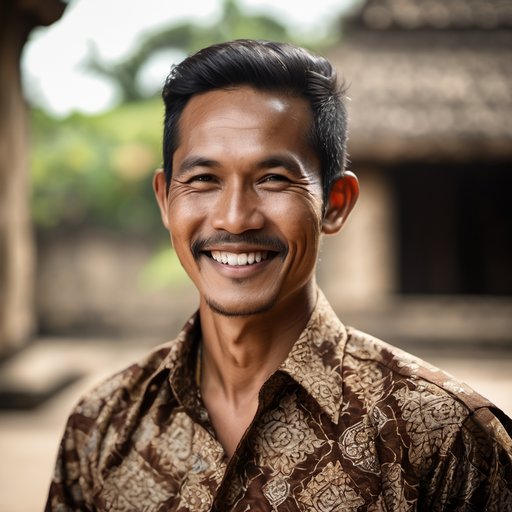
I grew up at the foot of this temple. My father guided Borobudur for thirty years, and I have been guiding it since 2006, so I have watched the sunrise from every angle this valley offers. The morning light on Borobudur is, honestly, the reason I still get up in the dark after two decades. But the sunrise you imagine, the photograph you have seen a hundred times, might be the temple as a silhouette from a hilltop four kilometres away, or it might be the direct sun striking the stone from among the seventy-two stupas themselves. These are not the same morning. They are not even the same ticket. And since 2023, getting onto the terraces for the second kind of sunrise has become the single biggest planning hurdle at this temple. If climbing to the summit at dawn is your dream, the guaranteed ClimbUP tour (4.96 stars, 157 reviews) locks your summit slot in writing and removes the quota gamble before it starts. But read on, because the quota is only one piece of what you need to know before you book.
My name is Rama Kusuma. I live in Sleman, about forty kilometres southeast of Borobudur, and everything on this page comes from standing on these hills and terraces in the cold dark, watching the light come up over the Kedu plain, and learning the hard way which pieces of advice actually matter and which ones are just filler. I will walk you through the two sunrise experiences in detail, explain exactly what changed in 2023 and why it matters, tell you what to wear (you will be colder than you expect), and then match three tours to three kinds of sunrise seekers. By the end you will know which morning is yours.
The two sunrises: Setumbu Hill vs the temple terraces
Let me draw the distinction plainly because this is where almost every booking goes wrong. There are two ways to watch the sun rise at Borobudur, and they are not variations on the same experience. They are different sites, different tickets, different views, and different feelings entirely.
Setumbu Hill is a viewpoint roughly four kilometres west of Borobudur, sitting at about four hundred metres elevation. You climb a short paved path from the car park, maybe ten minutes, and stand on a viewing platform looking east across the Kedu plain. On a clear morning the temple appears as a dark silhouette below you, with morning mist pooling in the valley and the volcanoes, Merapi and Merbabu, stacked behind it. The photograph is the classic Borobudur postcard: temple as shape, not detail, layered against the dawn sky. You are not at the temple. You are looking at it from a distance. The ticket is separate and modest, around IDR 60,000 for foreigners, and the gate opens around 4 a.m. so you can be on the platform before the colour starts building.
The temple terraces are the structure itself. You are standing among the seventy-two bell-shaped stupas on the upper circular platforms, with the carved stone under your feet and the morning sun striking the perforated stupas directly from the east. The light hits the Buddha statues inside and the andesite goes gold. This is the intimate sunrise: the texture of the stone, the shadow of the fretwork, the feeling of standing inside the monument as the day begins rather than viewing it from a distance. But since 2023, getting here requires the climb-to-the-top ticket, which costs around IDR 455,000 for foreigners, comes with a small daily quota, and requires the special upanat sandals and a local guide. The courtyard-only ticket, around IDR 375,000, lets you walk the grounds and see the temple from below, but it does not get your feet onto the terraces.
Here is the decision in one sentence: Setumbu gives you the silhouette with the volcano behind and costs less; the terraces give you the stone up close in direct light and cost more, and the quota might stop you from getting there at all if you do not book ahead. Which one is right for you depends on the photograph you want and the morning you are willing to commit to. I cover the photographic trade-off in more detail in my photography tips guide, but the short version is this: on a clear dry-season morning, the terraces beat the hill. The sun on the stone is something a silhouette can never give you. Save Setumbu for the misty mornings when you want mood, not detail.
What the 2023 quota change means for sunrise climbers
Before 2023, the old postcards were accurate: you bought a ticket, you walked up, you sat among the stupas as long as you liked. That Borobudur no longer exists for most visitors. Since 2023, climbing the upper terraces requires a separate timed ticket with a capped daily quota, a mandatory local guide, and the woven upanat sandals designed to spare the ninth-century andesite from twelve hundred years of shoe soles. The foreigner courtyard entry runs around IDR 375,000, roughly twenty-three dollars, and it lets you walk the grounds and see the temple from the lawn. The climb-to-the-top ticket runs closer to IDR 455,000, about twenty-eight dollars, and it is the one that actually puts your feet on the terraces. The temple gates open around half past six in the morning.
For sunrise, here is where it gets complicated. The climb-to-the-top ticket has timed slots, and the earliest slots are what sunrise photographers need. The daily cap fills early, sometimes days in advance in the high season. I have stood at the gate and watched couples who flew across the world learn that the climb slots were gone by the time they arrived. They were left with a courtyard view of a temple they could not enter, and there is nothing I can do for a traveller at that point except tell them what I am telling you now: book the climb ticket online, days ahead. The quota is real, it is small, and it does not make exceptions for long-haul flights.
One more thing that catches people out: the climb-to-the-top ticket is not the same thing as a "sunrise package." Some operators sell a Setumbu Hill sunrise with no temple climb access at all, and the wording on the listing is just fuzzy enough that travellers do not notice the gap until they are standing at the Borobudur gate holding a ticket that only covers the hill four kilometres away. Read what your listing actually says. If the words "climb to the top" are not in there, you are buying a courtyard view or a hill view, not a terrace sunrise. The arguments I have witnessed at the temple gate all start in the same place: a traveller who bought the cheaper package and did not read what it excluded.
Pickup times explained: 3:30 pickup is not 3:30 sunrise
This is the single most common confusion I deal with, and it catches first-timers every season. When a sunrise tour advertises a 3:30 a.m. pickup, that is the time the driver arrives at your hotel. It is not the time the sun rises. It is not even the time you reach the temple. From central Yogyakarta, Borobudur is roughly an hour to an hour and a half by road, longer if your hotel is on the southern side of the city. A 3:30 pickup means you arrive at the Setumbu Hill car park around 4:30 to 5:00 a.m., climb the short path to the viewing platform, and are in position before the colour starts building around 5:15 to 5:30. The sun itself breaks the horizon roughly half an hour after that, but as I tell every photographer who asks, the best light is the pre-dawn colour, not the moment the disc actually appears.
If your tour is for the temple terraces rather than Setumbu, the timing is different. The temple gates open around 6:30 a.m., and the climb-to-the-top ticket slots are timed. You are not standing on the terraces before dawn in the dark. You are walking up as the gates open, with the sun already above the horizon but still low enough to strike the stupas at a warm angle. It is a different kind of sunrise, the sun is up, but the light is still golden and the morning is still quiet. Expect to be on the terraces by roughly 7:00 a.m. for the best light.
The practical note: eat something before your pickup. Nothing is open at 3:30 a.m. on the road to Borobudur, and you will be standing on a hill or climbing stone steps for the next several hours. A banana and a bottle of water in your bag, eaten in the car on the way, is the difference between enjoying the sunrise and watching it through a fog of low blood sugar. I learned this the hard way in my early guiding years and I have never let a guest skip breakfast since.
What to wear (the hill is cold, the temple is cooler than you think)
Tropical Java tricks visitors into believing it is warm everywhere, all the time. It is not. The pre-dawn Kedu plain, especially on Setumbu Hill exposed to the wind before the sun lands, is genuinely cool, sometimes cold enough to see your breath. Bring a jacket, a real one, not a thin hoodie. I have watched travellers in shorts and a t-shirt shiver through the half-hour wait for the sun and be too uncomfortable to enjoy what they came for. Layers are the answer: a warm layer for the pre-dawn wait, a lighter layer underneath for when the sun hits and the day heats up fast. Dress so you can peel down through the morning rather than freeze at 4:30 a.m. or roast by 9.
On the temple terraces, the upanat sandals are provided as part of the climb ticket, so you do not need special footwear for the stone. But the walk up involves steep ninth-century steps, and the sandals are woven, not supportive. If you have weak ankles or balance concerns, the climb is manageable but slow. Take your time. The temple has waited twelve hundred years; it will wait an extra five minutes for you.
One more thing I tell every sunrise guest: bring a small torch or use your phone light for the Setumbu Hill path. The walk from the car park to the viewing platform is paved but unlit, and in the 4 a.m. dark before the gate lights come on, you want to see where you are putting your feet. It is ten minutes of easy walking with a light and ten minutes of stumbling without one.
The straight line: Mendut, Pawon, and why sunrise photographers should know it
There is a detail I pull over for on the road between Mendut and Borobudur, and it changes how people look at the temple. Mendut Temple, about three kilometres east of Borobudur, holds a magnificent three-metre seated Buddha flanked by two bodhisattvas and is the oldest Buddhist temple in this little group, early ninth century. Pawon sits roughly halfway between Mendut and Borobudur, smaller, less visited. And here is the thing: if you draw a line on a map, Mendut, Pawon, and Borobudur fall on an almost perfect straight line. Many scholars believe this was intentional, a ceremonial processional route where pilgrims would begin at Mendut, pass through Pawon, and arrive at Borobudur for the main event.
Why this matters for your sunrise is simple. If you are shooting from Setumbu Hill, the temple is a silhouette four kilometres away and the alignment is invisible to your lens. But if you are climbing the terraces, the knowledge that you are standing at the end of a thousand-year-old straight line through three temples changes what you are looking at. The stone under your feet was laid with intention, not accident. The people who hauled two million blocks without a drop of mortar did not do much by coincidence. I once pulled a group over on that road and showed them the line on a map; a skeptical traveller called it coincidence, and I told him what I just told you. His whole posture toward the day shifted. He started asking what else was deliberate. That is the temple I want you to meet at sunrise: the one built as an argument, not a backdrop.
On a practical level, if your tour includes Mendut, as the Borobudur Temple Climb to the Top and Prambanan one-day tour does (4.93 stars across 664 reviews), you get the full arc of the alignment. Most sunrise tours drive straight past Mendut. This one stops, and the morning light inside that small temple, with the three-metre Buddha lit from the doorway, is a photograph most visitors never take because most visitors never stop.
Dry season vs wet season sunrise: what you are actually gambling on
Central Java has two seasons and they decide whether your sunrise works or does not. The dry season runs roughly May to September. Clear skies are common, the mist on the Kedu plain is at its most photogenic, and the odds of a clean sunrise are high, maybe eight mornings out of ten. This is when the Setumbu silhouette is most reliable and when the terrace light on the stupas is at its warmest and cleanest. It is also the busiest season, so the climb quota fills fastest and you need to book further ahead.
The wet season runs roughly November to March. Cloud cover is frequent and the classic sunrise is a gamble, perhaps four mornings out of ten will give you the clean light you want. The trade-off is that the wet-season mornings that do clear are extraordinary: the air is washed clean, the volcanoes are sharp against the sky, and the crowds are thinner, which means more room on the platform and a quieter climb. The wet season is not a write-off, but you need to plan for weather disappointment and have a backup morning in your itinerary. If a temple sunrise is the centre of your trip and you are flying a long way for it, weight your dates toward the dry months and give yourself at least two possible mornings. The shoulder months, April and October, are the sweet spot: reasonable clearance rates, thinner crowds, and a little more flexibility on the quota.
Three sunrise tours, matched to three kinds of morning
The tour you book depends entirely on which sunrise you want: the silhouette from the hill, the stone from the terraces, or the full cultural arc with Mendut folded in. Here is how I match travellers to each.
The classic Setumbu silhouette: mist, volcanoes, and the full sweep
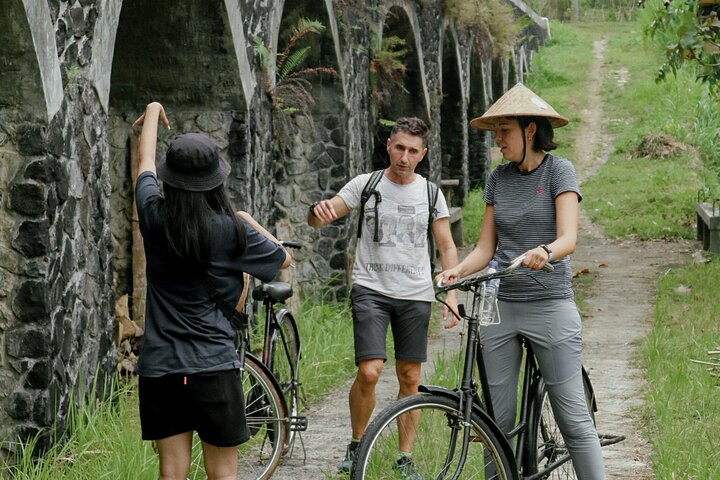
If Setumbu Hill is the sunrise you want, the misty silhouette with Merapi stacked behind, this is where most first-timers begin. The Borobudur Sunrise from Setumbu Hill, Merapi Volcano and Prambanan full-day tour is the most-reviewed option at 4.91 stars across more than a thousand travellers. You start in the dark on the hill, watch the mist lift, then descend for the Borobudur climb, then the Merapi jeep country, then Prambanan to close. Four Yogyakarta experiences in a single long day.
Here is the honest part: this is a twelve-hour day with a pre-dawn pickup. A 3:30 a.m. pickup time means an hour-plus drive in the dark before anything happens. If you tire easily, or you are travelling with small children or elderly parents, this is not your day. But if you have the legs for a full sweep and the Setumbu silhouette is your reason for waking up, this is the tour that starts you in the right place at the right hour.
See dates & prices →
The guaranteed terrace sunrise: climb access locked in writing for stupa-level light
If the temple terraces are your sunrise, and you want the sun striking the seventy-two stupas directly with the stone going gold under your feet, the quota is the thing standing between you and that frame. The Borobudur ClimbUP guaranteed with sunrise option and Prambanan day tour carries 4.96 stars from 157 travellers and does the one thing that matters most: it guarantees your capped climb-to-the-top slot in writing. No quota gamble, no standing at the counter hoping the morning slots are not sold out. For the traveller whose single non-negotiable dream is to stand among the stupas as the sun comes up, this is the tour that removes the risk that ruins people's mornings.
Who should skip it: if you want the silhouette photograph from Setumbu Hill, you are paying for climb access you will not use. The guaranteed climb is a premium for a specific desire. Be honest with yourself about whether the summit terraces are the thing, or whether the view of the temple from the hill is enough.
See dates & prices →
The cultural sunrise: Mendut included, the full alignment from the oldest temple to the summit
For the traveller who wants the sunrise to mean something, not just look good in a frame, the Borobudur Temple Climb to the Top and Prambanan one-day tour at 4.93 stars across 664 reviews is the one I point thoughtful travellers toward. It adds Mendut, with its magnificent three-metre seated Buddha, and traces the straight line through Pawon to Borobudur that most tours drive past. You climb the terraces in morning light with the story of the alignment already in your head, and the stone means more for it. The Merapi volcano is left out, deliberately, which buys you more time among the carvings and a slower pace at both temples.
It is not for you if seeing Merapi the same day is on your list. This tour trims the volcano to give the temples room to breathe. But if the sunrise is about the temple rather than the checklist, this is the morning with the deepest arc.
See dates & prices →How I choose which sunrise tours to recommend
I apply the same three checks to every tour on this site, in the same order. For sunrise tours at Borobudur, each check carries specific weight:
1. Guide quality. At sunrise this is about more than knowledge of the reliefs. A good sunrise guide knows the platform positions on Setumbu Hill, where the mist pools and where the wind cuts coldest. They know the pace of the climb so you reach the upper terraces as the light is still warm, not after it has gone flat. And they know when to be quiet, because the best ten minutes of a Borobudur sunrise are the ones where nobody speaks and everyone just watches the light move. I look for operators whose guides understand that silence is sometimes the strongest commentary.
2. Safety record. The pre-dawn drive on dark roads is the hidden risk most travellers do not think about. I look for operators with sober drivers who know the Borobudur route in the dark, who do not speed, and who have done this drive hundreds of times. On the terraces themselves, the ninth-century steps are steep and the upanat sandals are not hiking boots. A guide who keeps the pace reasonable and watches for unsteady feet is the minimum standard.
3. Value. At sunrise, value almost always comes down to one question: does the price include the climb-to-the-top ticket, or only the courtyard? The cheap sunrise packages are frequently a Setumbu Hill view with no temple access at all. The tours above pass this check because what is included is stated plainly, climb access means climb access, hill view means hill view, and neither is sold as the other. I earn a commission when you book through these Viator links, at no extra cost to you, that is how the site stays free. It does not change which tours pass the three checks, and plenty of well-paying listings never make it onto this page.
Rama's sunrise rules
- Decide between Setumbu Hill and the terraces before you book anything. They are two different sites, two different tickets, two different mornings. Buying the wrong one is the single most common mistake at this temple, and it is entirely avoidable if you know the difference before you click "book."
- Book the climb-to-the-top ticket online, days ahead. The daily quota is small and fills early. Turning up hoping to climb is how you end up with a courtyard ticket and a view from the lawn. If the summit is the dream, book it before you leave home.
- Sunrise tours quote the pickup time, not the start time. A 3:30 a.m. pickup means an hour-plus drive in the dark before you see anything. Eat something before you go, nothing is open out there, and bring a layer; the pre-dawn Kedu plain is cooler than tropical Java leads you to expect.
- Arrive at Setumbu Hill before the colour starts, not at sunrise itself. The best light builds twenty minutes before the sun breaks the horizon. The photographers who time their arrival for the listed sunrise minute have already missed what they came for.
- Bring a real jacket for the hill. The pre-dawn wind on Setumbu is cold enough to make you miserable in a t-shirt. Layers you can peel off as the day heats up are the answer.
- On a clear dry-season morning, skip the hill and shoot from the terraces. The light hits the stupas directly and the stone goes gold. Save Setumbu for the misty mornings when you want the silhouette with the volcanoes behind. Different weather, different choice.
The mistakes I watch travellers make at sunrise
The first and most painful is thinking Setumbu Hill and Borobudur are the same thing. Travellers pay the small fee for the hill sunrise, feel they have handled their ticket, and are then blindsided by the much larger temple entry as a separate cost at a separate site four kilometres away. Or worse, they discover their cheap sunrise package was hill access only and never included temple entry at all. Read what "climb to the top" versus "sunrise from the hill" actually includes. The arguments at the Borobudur gate all start right here.
The second is arriving on the day and discovering the climb quota is full. Since 2023 this has become the defining frustration at Borobudur, travellers who flew across the world, stood at the counter, and learned the word "sold out." The quota fills in advance. The booking happens online, days or weeks before, for someone who planned ahead. Be that person.
The third is dressing for the tropics and freezing on the hill. I have lost count of the travellers I have watched shiver through the Setumbu wait in shorts and a thin shirt, too cold to enjoy the light they woke up for. The Kedu plain before dawn does not care that you packed for Bali. Bring a jacket.
Let me leave you with the morning I carry up every dawn I work. Before my father passed in 2020, he climbed Borobudur with me one last quiet morning, slower than he used to, leaning on the warm stone. He did not recite anything. He just watched the light fill the valley he had guided for thirty years. He told me the temple would outlast both of us and the only thing we leave in it is how we made people feel. I carry that up every sunrise, and if you choose your morning honestly, the light on those stupas will carry it for you too.
Rama earns a commission when readers book through the Viator links on this site, at no extra cost to the traveller. This does not affect which tours are recommended, every tour passes three checks: guide quality, safety record, and value. Rama does not run a tour company. He does not sell packages.