They call Yogyakarta "Kota Gudeg", gudeg city, and once you taste the young jackfruit stewed half a day in coconut milk and palm sugar until it turns sweet and brown, you'll understand the nickname. Gudeg is the signature dish of this place, the thing every Javanese person from here grows up on, and the most famous name attached to it is Gudeg Yu Djum. If you want the traditional version, the old gudeg alley is Wijilan, just east of the Kraton, where the sellers have been ladling it out for generations. It is sweet in a way that surprises foreigners, this is not savoury curry, this is jackfruit cooked almost to candy, and you should taste it at least once to know what the city is named for.
Rama earns a commission when readers book through the Viator links on this site, at no extra cost to the traveller. This does not affect which tours are recommended, every tour passes three checks: guide quality, safety record, and value. Rama does not run a tour company. He does not sell packages.
But the food I'd send you to find is the cheap, late, real stuff: the angkringan stalls near Tugu station serving tiny "nasi kucing", cat-rice, portions and kopi joss, black coffee with a glowing coal dropped right in. That's where students and becak drivers eat. Order three small plates, sit on the mat, and let the night go long. The small-group night food walk, capped at eight travellers, 332 reviews at 4.96, is the one I would send a friend on: angkringan stops near Tugu, kopi joss with the glowing coal, the real Jogja after dark. That is Jogja with its shoes off, and it is the part of the city I love most to share.
My name is Rama Kusuma. I guide the temples, Borobudur, Prambanan, Merapi, but I am a Jogja man before I am anything else, and that half the questions travellers ask me on the temple road are about dinner. Where do I eat tonight? Is the street food safe? What is that coffee with the fire in it? So I wrote this page the way I'd answer a friend over a cigarette at the stall: honestly, with the trade-offs left in. This site is not a tour company. I do not run vans or sell packages. What I do is read the food-tour listings the way a guide reads them and tell you which ones fit what you actually came to taste. Below, after I tell you what Jogja food really is on the ground, I match four tours to the kind of traveller each one suits.
What Jogja food actually is when you get there
Forget the idea that a city's food lives in its restaurants. In Jogja, the heart of it is on the street, low to the ground, and it comes alive after dark. The angkringan is the soul of the thing, a low cart or stall, a mat or a bench, where you pick from a pile of small banana-leaf parcels of nasi kucing, a few skewers off the grill, a glass of sweet tea, and you pay almost nothing. The portions are tiny by design; that is the whole point. You are meant to order several, eat slowly, and stay. It is the everyday cheap supper of this city, and nobody who actually lives here treats it as exotic.
Then there is kopi joss, the angkringan trick that catches every visitor off guard. They brew thick black coffee and drop a lump of glowing charcoal straight into the glass. It hisses, it smells of woodsmoke, and the carbon cuts the acidity so the coffee goes smooth and a little sweet. The original stalls for it sit near Tugu station, and you should try it at least once even if "charcoal in my coffee" sounds alarming. South of the city, out toward Imogiri, is sate klathak, goat satay grilled on iron bicycle spokes instead of bamboo, because the metal carries the heat into the centre of the meat, seasoned with nothing but salt. And in the Pathuk (Pathok) neighbourhood you'll find bakpia, the small round pastries filled with sweet mung bean that everyone takes home as a gift; "Bakpia Pathok 25" is the name you'll see most. Over all of it presides Malioboro, the main commercial street, the busiest street-food artery in the city, loudest and most crowded after dark, wonderful for the atmosphere, but not where I'd tell you the realest food hides.
Four Yogyakarta food tours, and who each one is really for
Food in Jogja splits two ways: you can be shown it, walked through the stalls at night by someone who knows which cart is which, or you can learn it, in a kitchen, with a market basket and your own hands. The four listings below cover both. The difference between them is not quality; they all review well. The difference is whether you want to walk and eat after dark, or shop and cook in the day, and how much you lean on other travellers' ratings before you commit. Here is how I match people to each.
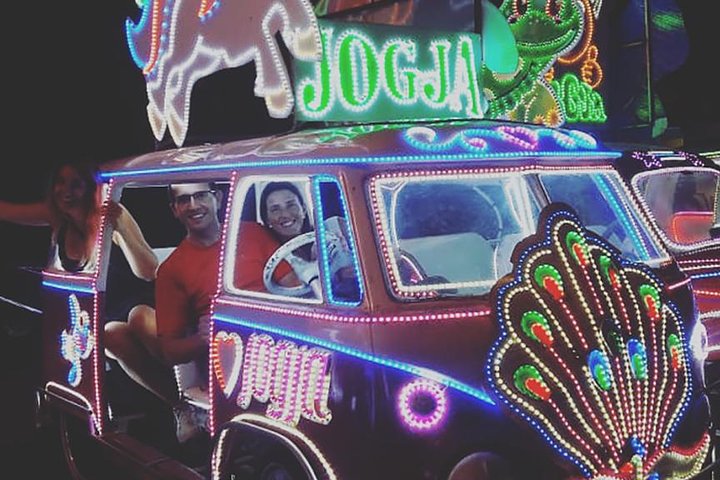
For the traveller who wants to eat the real Jogja after dark
If you take one thing from this page, let it be a night food walk, and the Small-Group Walking and Food Tour by Night in Yogyakarta is the one I point most people toward. It sits at 4.96 stars across 332 travellers, which is a great deal of agreement, and it is capped at eight people, so you are not herded. It does the thing that matters: it takes you to the street-food stops after dark, when the city actually eats, instead of parking you at a tourist table. This is the tour for the person who saw the angkringan from the taxi window and wanted to sit down at it but didn't know how.
Who should look elsewhere? If you want a white tablecloth and a sit-down dinner, this is not your evening, it is mats, plastic stools, and standing at carts. And if street stalls genuinely make you uneasy, no guide can talk you all the way out of that in one night. But if you are even a little curious, this is the gentlest possible way in: someone beside you who knows the stalls, eating what they eat.
See dates & prices →
For the cook who wants to bring Jogja home in their hands
Some travellers don't want to be shown the food, they want to make it. For them the Yogyakarta Cooking Class and Market Tour is the hands-on choice, 4.96 stars across 103 travellers. It starts where every Javanese cook starts, the local market, learning the spices and the greens and how a Jogja kitchen actually shops, and then you cook, including tumpeng, the cone of yellow turmeric rice we build for ceremonies. That cultural context is what lifts it above a recipe lesson: you learn why the rice is yellow, why the cone, what it means at a celebration.
The trade-off is time and intent. A cooking class with a market run is a half-day commitment, and at the end you have cooked your lunch rather than grazed across a dozen stalls. If your days in Jogja are short, or you simply want to eat the food rather than make it, the night walk above will serve you better. But if your favourite souvenir is a dish you can cook for friends at home, this is the one.
See dates & prices →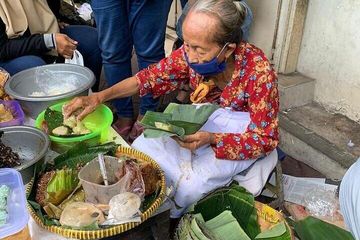
For those who want history and food in the same evening
If you don't want to choose between sightseeing and supper, the Yogyakarta Historical and Food Tour braids them together, a perfect 5.0 rating, an evening walk that blends heritage sites with a night market and street food. For a first evening in the city, when you want to get your bearings and your dinner at once, it is a tidy way to do both: a little of the old town, a little of the lamplit market, food along the way.
I owe you the honest caveat here: that 5.0 sits on only 12 reviews, a small base, so you are trusting the shape of the tour more than a crowd. And it runs a tight three-hour format, enough for a taste of both worlds, not a detailed look into either. If you want a serious food crawl, take the dedicated night walk; if you want history with your meal and don't mind a smaller review count, this is a good evening.
See dates & prices →
For the traveller who wants someone's home kitchen, not a classroom
There is a quieter, more intimate version of the cooking day: the Yogyakarta Cooking Class run home-style by Ibu Herni. You shop the market with your host and then cook in a real home kitchen, the kind of small, personal afternoon that some travellers treasure far more than a polished group class. If what you want is to be welcomed into someone's house and taught the way a daughter would be taught, this is that.
The plain honesty: this listing has no ratings yet, it is new. There is no crowd to reassure you, so if you are the kind of traveller who needs strong social proof before booking, you will feel that absence. But every well-loved class started with no reviews, and an intimate home kitchen is exactly the sort of experience that rarely disappoints the people willing to go first. If you trust the format over the star count, this is worth your afternoon.
See dates & prices →How I choose which food tours to recommend
I apply the same three checks to every tour on this site, in the same order. Here is exactly what each one means for food in Jogja:
1. Guide quality. A food walk lives or dies on the person leading it. A guide who only marches you to the stalls the other tour companies use is selling, not feeding. What I look for is someone who eats where they take you, who knows which angkringan owner makes the better skewers, who can explain why the coffee has a coal in it, who orders in the local dialect and gets a nod back from the cart. The same goes for a cooking class: a teacher who tells you why the tumpeng is a cone, not just how to shape it. I trust operators whose guides treat the food as something they love, not inventory.
2. Safety record. Street food frightens people, and I understand it, but the angkringan are where locals eat every single day, and a cart with high turnover is far safer than a tourist kitchen with food sitting out. What I actually watch for is the boring stuff: sane walking routes after dark, real attention to anyone with allergies or dietary limits, and a market run that doesn't leave you stranded. Eating well in Jogja is not dangerous. Being led carelessly is.
3. Value. Not cheapest, value. The street food itself costs almost nothing; what you pay a tour for is the person who knows where to take you and what to order, so you don't waste your one evening on the wrong cart. A fair food tour is honest about what's included, how many stops, whether the food is paid for, whether the class covers your market basket and your lunch. I earn a commission when you book through these Viator links, at no extra cost to you, that is how the site stays free. It does not change which tours pass the three checks, and plenty of well-paying listings never make it onto this page.
Rama's Jogja food rules
- Go at night for the angkringan. That's when Jogja eats. The stalls come out after dark, the city slows down to mat-and-stool pace, and the food you came for is sitting under a lamp near Tugu station. A daytime food hunt misses the whole mood.
- Bring cash, in small notes. The carts and stalls don't take cards, and nobody at a midnight angkringan wants to break a large bill. Keep small rupiah notes in your pocket and you'll glide through the night.
- Try kopi joss at least once. Black coffee with a glowing coal dropped in sounds strange, I know, but the carbon cuts the acidity and smooths the whole glass, and it is one of the few things genuinely born on these streets. Do it once even if you never do it again.
- Don't just eat gudeg. Taste the dish the city is named for, yes, go to Wijilan east of the Kraton for the traditional version. But the street food is the real heart of the place. Gudeg is the postcard; the angkringan is the address.
- Book cooking classes ahead in high season. The good home kitchens and small-group classes fill up in the dry months when the city is busy. If a class is part of your trip, reserve it before you arrive rather than hoping for a same-day seat.
- Order three small plates, not one. Nasi kucing is "cat-rice" for a reason, the portions are tiny on purpose. Order several, mix in a few skewers, and let the meal stretch across the evening. That's how it's meant to be eaten.
The mistakes I watch travellers make with Jogja food
The first is eating only at the tourist restaurants along Malioboro and believing they've tasted the city. Malioboro is the busiest street-food artery in Jogja, especially at night, and there is real fun in its noise, but the sit-down places that line it for foreigners are not where the food lives. Travellers eat a tidy plate under bright lights, photograph it, and leave thinking that was Jogja. It was Jogja's waiting room. The real meal is two streets over, lower to the ground, served on banana leaf.
The second is being afraid of the street stalls. I understand the fear, an open cart in an unfamiliar country looks like a risk. But the angkringan are exactly where locals eat, every day, year after year, and that constant turnover is the safety. Let me tell you about a guest from 2022, a solo backpacker on a night food walk who was nervous the moment she saw the angkringan, the tiny cat-rice portions and the kopi joss with its glowing coal looked strange and a little frightening to her. I told her this is where the students and the becak drivers actually eat, and that the small portion is the point: order three, and talk all night. By her second charcoal coffee she was trading jokes with the stall owner in broken Indonesian. She messaged me a year later to say it had been her favourite night in all of Asia. The fear lasts about ten minutes. The memory lasts a year.
The third is skipping kopi joss because charcoal in coffee sounds wrong. It is the most distinctively Jogja thing you can drink, and people talk themselves out of it on the word "charcoal" alone. Try it. And the fourth, the small practical one, is ordering a single nasi kucing and then sitting there wondering why you're still hungry, they are tiny by design, three or four make a supper, and the whole pleasure is in ordering a few and lingering.
Let me close with one more story, because it taught me how to describe this food. In 2022 I had a French guest at a sate klathak stall down toward Imogiri, and she could not believe the satay was grilled on bicycle spokes, actual iron spokes, not bamboo. The old seller put down his fan and explained: the metal carries the heat into the centre of the meat, so it cooks through, not just on the surface. She had eaten satay across Asia, she told me, and it was the first time anyone had shown her why it was made the way it was. We sat there two hours. What she'd booked as a quick lunch became the story she told about her whole trip. That is what good Jogja food does, if you let it: it doesn't just feed you, it sits you down and keeps you. Tell me how you'd rather eat, walked through the night, or taught in a kitchen, and the four tours above will sort themselves out.
Explore More
Related comparisons and guides:
Small-Group Walking and Food Tour by Night in Yogyakarta
★★★★★ 5.0 (337 reviews) · From $575000
Check Availability →Yogyakarta Cooking Class
( reviews) · From $71
Check Availability →Yogyakarta Cooking Class and Market Tour
★★★★★ 5.0 (105 reviews) · From $32
Check Availability →