This is the page I wish I could hand every traveller before they buy a flight. Yogyakarta is not a difficult place to visit, it is warm, cheap, and patient with newcomers, but a handful of small things, known in advance, will save you a sweaty argument at a temple gate or a scramble for cash an hour from the nearest ATM. None of this is secret. It is simply the stuff that lives in a guide's head and rarely makes it onto a booking page. So here it is, in the order you will actually need it.
When to come
Rama earns a commission when readers book through the Viator links on this site, at no extra cost to the traveller. This does not affect which tours are recommended, every tour passes three checks: guide quality, safety record, and value. Rama does not run a tour company. He does not sell packages.
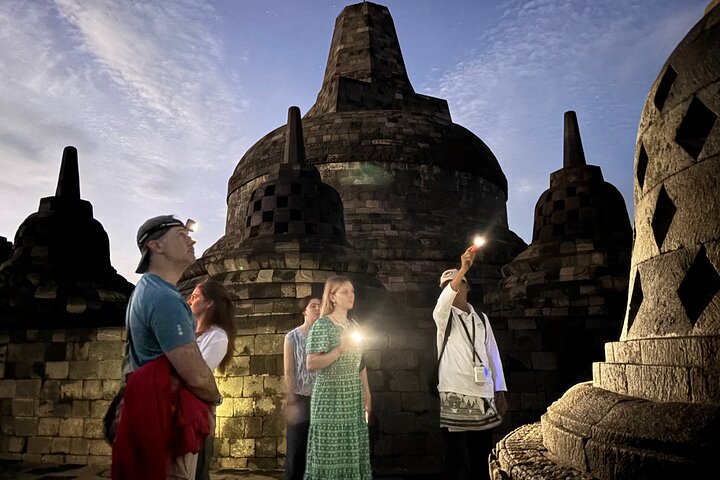
Central Java has two seasons, and they matter more than the month on the calendar. The dry season runs roughly May to September, clearer skies, far better odds for a sunrise that actually shows, and the safest footing on Merapi's dust and the cave ropes. The wet season runs roughly November to March, when afternoon downpours are routine and the famous "Heaven's Light" beam in Jomblang cave can simply refuse to appear behind cloud. The wet season is not a write-off, the rice fields are greenest, the crowds thinnest, and rain usually comes in the afternoon, leaving mornings clear. But if a temple sunrise is the centre of your trip, weight your dates toward the dry months, book the early slots, and know that the Borobudur sunrise from Setumbu Hill is where most first-timers begin, 4.91★ across more than a thousand reviews.
Getting in from the airport
Almost everyone now lands at Yogyakarta International Airport (YIA) in Kulon Progo, roughly 40 km west of the city, budget 1 to 1.5 hours by road to your hotel, longer in traffic. There is an airport rail link to the city's edge, but with luggage and after a long flight most travellers just take a taxi or a pre-arranged car. Do not be alarmed by the distance; it is normal, and the drive runs through pleasant countryside. Tell your hotel your flight number and many will arrange a driver who waits with your name on a card, usually the calmest way to start.
Getting around
For moving around the city itself, use Gojek or Grab, the ride-hailing apps. They are cheap, metered by the app so there is nothing to haggle, and you can summon a car or a motorbike taxi (ojek) in minutes. Install one before you arrive and link a card. For the temples and volcanoes, hire a car with a driver for the day, Borobudur, Prambanan, Merapi and the Gunungkidul caves are spread far apart and a private driver who knows the roads is worth every rupiah, especially for pre-dawn starts when the apps are thin. Your hotel or the tour operator will arrange this; a full day with driver is far more affordable than visitors expect.
Cash culture, this one catches people out
Yogyakarta is modernising fast, but the moment you leave the malls and hotels you are in a cash economy. The warungs (small eateries), the Merapi jeep crews, the cave villages of Gunungkidul, the parking men, the satay grillers, almost none of them take cards. Carry small notes. Breaking a 100,000 rupiah note at a roadside stall is a daily frustration; a fold of 10,000s, 20,000s and 50,000s makes you everyone's favourite customer. Draw cash in the city before you head out, because the nearest reliable ATM to a cave village or a volcano track can be an hour back toward town.
Temple tickets, the prices, the hack, and the quota
Foreigner vs domestic pricing is real, official, and not a scam. Indonesians pay a lower, subsidised rate at the major sites; foreign visitors pay more. This is government policy across Indonesian heritage sites, printed on the official tariff, and you will see it everywhere. It is not a tout overcharging you, do not argue it at the window.
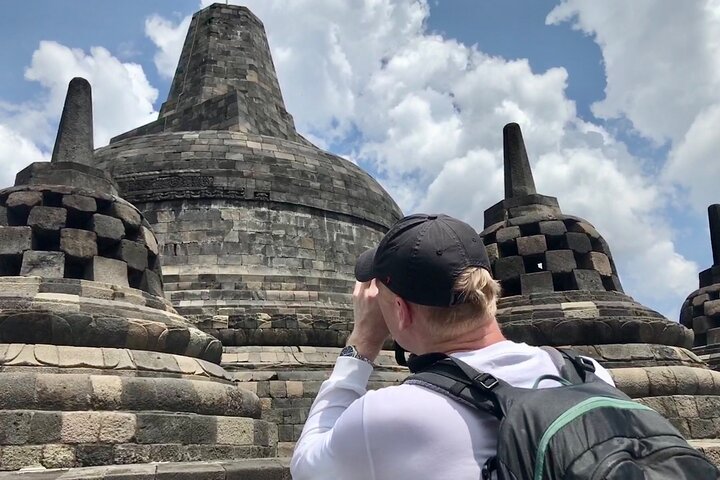
The combined ticket hack: Borobudur and Prambanan are run by the same authority, and there is a discounted combined (B+P) ticket covering courtyard entry to both, valid across two days. If you intend to see both temples anyway, and many travellers should, ask for the combined ticket rather than buying two separate entries. The private all-inclusive Borobudur and Prambanan tour includes it, 4.96 stars and self-paced, with time to read the reliefs instead of racing the clock. The operators rarely volunteer it.
The Borobudur climb quota: since 2023 you cannot simply wander up onto the terraces. The climb-to-structure now needs a separate timed ticket with a small daily quota, special woven "upanat" sandals to protect the original stone, and a local guide. Foreign courtyard entry runs around IDR 375,000; the climb-to-top ticket is closer to IDR 455,000. If climbing to the top is your dream, book it days ahead, not at the gate, where "sold out" is a word I have watched break too many hearts. The guaranteed ClimbUP tour (4.96 stars) locks your slot in writing, it is the one I point people toward when the summit is the whole reason they came. And note that Setumbu Hill, the misty sunrise viewpoint 4 km west, is a completely separate site with its own ticket, the hill photo is not Borobudur access.
What to pack
- A real jacket for the highlands. Dieng and the pre-dawn volcano starts are genuinely cold, single-digit Celsius at 2,000 metres. Tropical Java does not prepare you for it, and a thin hoodie will not cut it on Bromo's rim before sunrise.
- Shoes you can ruin for Merapi. The lava-jeep route is fine black volcanic dust that gets into everything. Closed shoes you do not love are the right call, not your good white trainers.
- Layers for pre-dawn. Sunrise starts begin cold and end hot. Dress so you can peel down through the morning rather than freeze at 4 a.m. or roast by 9.
- Sun protection and water for the temples themselves, the courtyards are open stone with little shade once the day heats up.
Money, time, and Ramadan
Currency is the Indonesian rupiah (IDR), trading around 16,000 to the US dollar, so prices have a lot of zeros, and a "375,000" ticket is roughly USD 23, not 375. Give yourself a day to stop flinching at the numbers. Time zone is Western Indonesia Time (WIB), UTC+7, and Java does not observe daylight saving, so the offset is steady year-round.
If your trip falls during Ramadan, plan with a little extra grace. Indonesia is the world's largest Muslim-majority country, and during the fasting month some warungs open later or keep lower daytime hours, and it is courteous to be discreet about eating and drinking in public during daylight. The temples and tours run as normal, and the evenings come alive when the fast breaks, many travellers find Ramadan a quietly wonderful time to visit. Just check daytime opening hours and be considerate, and you will be met with the same warmth as ever.
Now pick where to go
You have the practical side. Here is the feeling side, each hub has my honest tour notes, prices and the mistakes I watch travellers make.
Borobudur & Prambanan
The two great temples, when to choose each, the combined ticket, and the climb quota explained without the sales gloss.
Merapi & the Caves
The lava-jeep route across the 2010 tracks, and Jomblang's sixty-metre rope descent toward the Heaven's Light beam.
Multi-Day & Local
Overland to Bromo and Ijen, the gentle Dieng Plateau, plus village cycling and the food the locals actually eat.
Explore More
Related comparisons and guides:
Yogyakarta International Airport to Hotel - Arrival Transfer
★★★★☆ 4.0 (6 reviews) · From $35
See dates & prices →Borobudur Sunrise from Setumbu Hill, Merapi Volcano & Prambanan Full Day Tour
★★★★★ 4.9 (1,097 reviews) · From $99
See dates & prices →Borobudur Full Climb Up And Prambanan ALL INCLUSIVE PRIVATE Tour
★★★★★ 5.0 (181 reviews) · From $45
See dates & prices →Borobudur ClimbUP guaranteed (sunrise option)& Prambanan Day Tour
★★★★★ 5.0 (164 reviews) · From $325000
See dates & prices →