Rama earns a commission when readers book through the Viator links on this site, at no extra cost to the traveller. This does not affect which tours are recommended, every tour passes three checks: guide quality, safety record, and value. Rama does not run a tour company. He does not sell packages.
If the temples are Java's grand statements, the village cycling is its quiet sentence. We roll out early through the rice fields toward the Menoreh Hills or the old streets of Kotagede, the first Mataram capital, before the heat sits down on the day. We stop where tofu is pressed by hand, where a silversmith still leaves his own mark in the metal because a machine can't. It's flat, it's slow, and it's the Java most temple visitors drive straight past without seeing. The Menoreh Village cycling route through the rice fields and the hills west of the city holds 675 reviews at a near-perfect 4.98, it is the one I would put a friend on for their first ride.
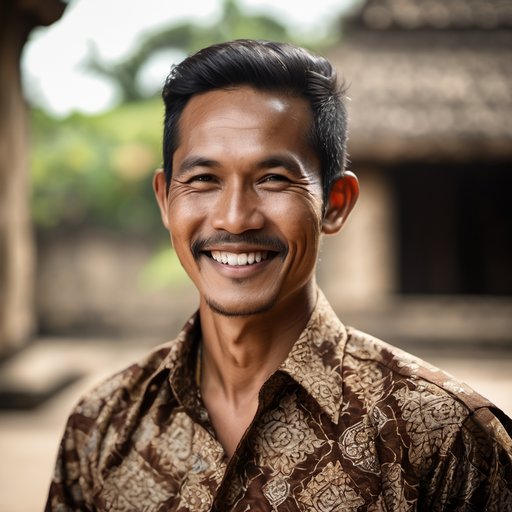
My name is Rama Kusuma. I live in Sleman, on the southern slope of Merapi, and I have guided the great monuments, Borobudur, Prambanan, for twenty years. But the cycling I love for a different reason. When you stand under a forty-seven-metre spire you feel the ambition of kings. When you push a bicycle along a bund between two flooded paddies and a farmer straightens up to wave, you feel something smaller and, I think, just as true: the daily life that has gone on beneath those temples for a thousand years, unbothered by any of them. The Menoreh Hills run west of the city, across Kulon Progo, a soft green wall behind the rice terraces and the little rivers. Southeast, Kotagede sits where the Mataram Sultanate raised its capital in the late sixteenth century, and where the silver craft still works by hand in narrow lanes. Between the two, there is more of real Java than any temple courtyard holds.
This site is not a tour company. I do not run vans or rent bicycles or sell packages, what I do is read the listings the way a guide reads them and tell you which ones fit what you actually came to feel. Cycling is the easiest part of a Yogyakarta trip to get wrong on paper, because the listings all use the same warm words, "village," "hidden," "authentic", and they do not mean the same rides. One threads rice fields under the hills. One winds through urban heritage and silversmiths. One rolls past temple spires from the saddle. So before the four tours, let me tell you what village cycling here actually is on the ground, and then I will match each ride to the kind of traveller it really suits.
What village cycling actually is when you get there
Forget the word "tour" for a moment. Most countryside rides here run two to three hours, flat to gently rolling, and they start early, soon after dawn, because by nine o'clock the morning heat is warming fast and a bicycle in the midday sun stops being a pleasure. You are not training; you are drifting. The pace is set by the stops, not the pedalling. A typical morning out toward the Menoreh Hills threads bunds between rice terraces, crosses a small river or two, and pauses at home industries, the places where ordinary food is still made by hand. Tofu pressed in wooden frames. Tempeh wrapped in leaf. Emping, the bittersweet crackers pounded flat from melinjo nuts. None of this is a performance for visitors; it is simply Tuesday in a Javanese village, and you are allowed to watch.
The other kind of ride is heritage rather than rural. Out toward Kotagede the lanes narrow and the story changes, you are pedalling through the old Mataram capital, past walled compounds and the silver workshops that have made this corner of Yogyakarta famous for four centuries. And some routes thread close to the temples themselves, through farming villages within sight of Prambanan's spires, so the monuments arrive softly, from the saddle, framed by the fields that feed them. The mistake travellers make is assuming one ride covers all of this. It does not. The rice-field morning and the silver-lane morning are different days, and knowing which you want is most of the booking.
Four cycling tours, and who each one is really for
All four rides below are excellent and well-reviewed, the difference is not quality, it is terrain and texture: whether you want open rice fields under the hills, urban heritage and silver craft, sustainability and the deep local view, or temple spires glimpsed from the saddle. A traveller who books the city-heritage ride hoping for paddy fields, or the rice-field ride hoping for landmarks, comes back faintly disappointed, not because the tour failed, but because it was never the ride they pictured. Here is how I match travellers to each.
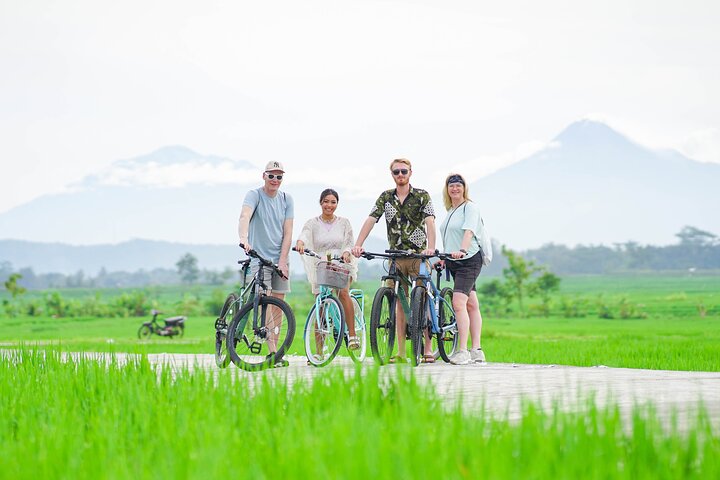
For the rice-field morning under the Menoreh Hills
If your picture of village cycling is green terraces, a small river to cross, and the soft wall of hills behind it all, this is the ride, the Menoreh Village Cycling tour. It is the clear leader among the countryside rides, 4.98 stars across more than six hundred and seventy travellers, and it earns that standing by being exactly what it says: rice fields, rivers, the Menoreh Hills, and genuine village life at a pace that lets you actually see it. This is the morning where you stop at the tofu press and the tempeh maker, where a farmer waves from the bund, where the Java beneath the temples reveals itself quietly.
Who should look elsewhere? Travellers hunting city sights or marquee landmarks. This is pure countryside, there is no temple to tick, no old palace to photograph, just the fields and the hills and the small industries between them. If that sounds thin to you, it is not your ride. If it sounds like exactly the thing the tour buses miss, book it.
See dates & prices →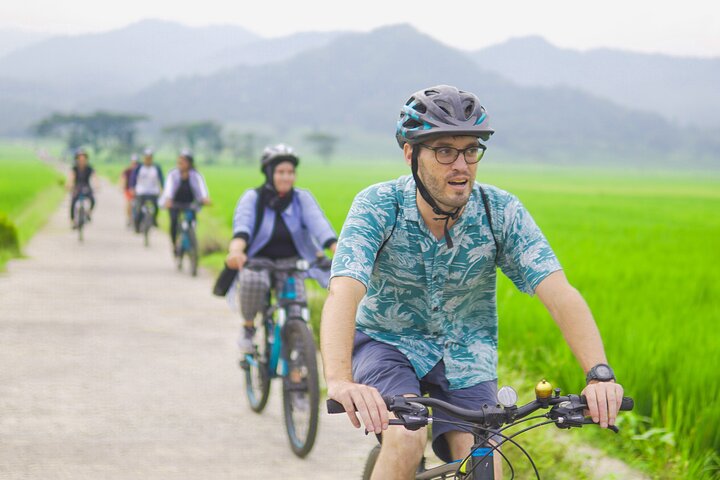
For the traveller who wants the Java most visitors never see
Some guests come to me a little tired of the postcard, wanting the deeper, quieter version of a place, and for them I point to the Jogja underrated spots Cycling Tour. It sits at 4.98 stars across a hundred and eighty reviews, and its whole character is sustainability and local insight, the corners of Yogyakarta that do not appear on any itinerary, reached gently, on a bicycle, with a guide who is interested in how people actually live rather than in hurrying you to the next photo. This is the ride for the traveller who measures a trip by how close it let them get, not by how many famous things they saw.
Be honest with yourself before booking: if you are here for the marquee landmarks, the spires, the stupas, the named sights, this ride will feel like it is missing the point, because that is not its point. It is built for the opposite traveller, the one who wants the unnamed lane and the ordinary doorway. Match yourself to it honestly and it is a quietly wonderful morning.
See dates & prices →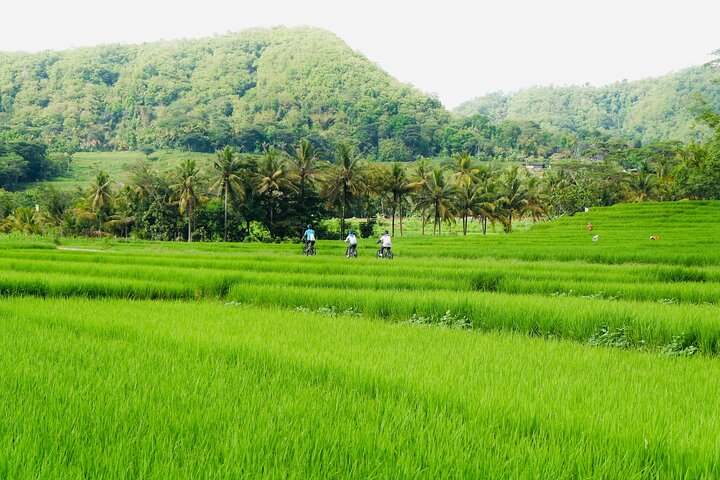
For history in the old streets: the Mataram capital and its silver
This is the ride I get most personal about, because it runs through Kotagede, and Kotagede holds one of my dearest memories of guiding. The Kotagede Royal Route Cycling Tour is a roughly three-hour ride, 4.95 stars across two hundred and thirty-eight reviews, and it threads the old streets of the first Mataram capital, the late-sixteenth-century seat of the sultanate, where the traditional silver craft still works by hand in narrow lanes. This is heritage cycling, history and metalwork in the same morning, the opposite texture from the open rice fields.
Let me tell you why it matters to me. In 2023 I brought my eldest daughter on a quiet cycling tour through Kotagede, and an elderly silversmith let her hammer a small pendant of her own. She asked him, children ask the real questions, why he still worked by hand when a machine would be faster. He said a machine cannot leave a person's mark in the metal. Two Dutch sisters who had been on the same tour stopped translating everything in their heads and just watched, and the whole morning slowed to the pace of that one workbench. That is what Kotagede does when it is done right. Who should skip it? If you came for rice-field countryside and the green hills, this is urban heritage instead, a different and quieter beauty, but not the paddy-field morning.
See dates & prices →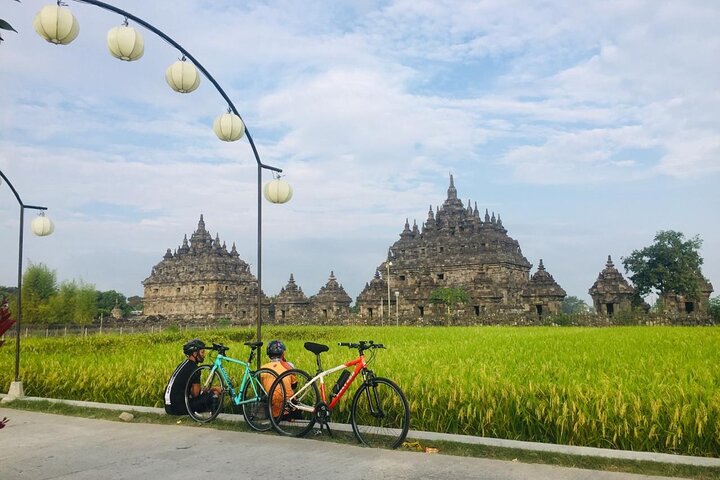
For temple spires from the saddle, through peaceful villages
If you cannot quite let go of the temples but want to arrive at them softly, through the fields rather than a car park, the FUN Cycling Tour De Temples is a lovely middle path. It carries a 5.0 rating, and what it does well is thread peaceful villages and cultural landmarks together so the temple spires appear from the saddle, the monuments framed by the farming villages that have always lived within sight of them. For a traveller who wants both the quiet roads and a glimpse of the grand statements, this stitches the two together.
Two honesties. First, the review base is smaller, around thirty reviews, so it has less of a track record behind it than the rides above, though what is there is glowing. Second, this is not pure rural cycling; the temples and landmarks are part of the route by design. If your heart is set entirely on rice fields and home industries with no monument in sight, the Menoreh ride suits you better. But if you want the spires to arrive gently, from a bicycle, this is the one built for it.
See dates & prices →How I choose which cycling tours to recommend
I apply the same three checks to every tour on this site, in the same order. Here is exactly what each one means for a village cycling ride:
1. Guide quality. On a bicycle the guide is everything, because the whole value is in the stops, not the pedalling. A guide who just leads you along a route and waits is selling transport. A guide who knows which silversmith will let a child hammer a pendant, who can explain why the tofu is pressed this way and not that, who reads the village rather than skirting it, that is the difference between a bike ride and a morning you remember for years. I trust operators whose guides treat the home industries and the craftspeople as people to be introduced, not props to be photographed.
2. Safety record. These rides are flat to gently rolling and genuinely gentle, fine for casual cyclists, but you are still on roads and bunds, in heat that builds fast after nine in the morning, and crossing the occasional small river. I look for operators who start early for a reason, who carry water and watch their guests in the warmth, who use sound bicycles and keep the group together on the lanes. A good cycling operator manages the heat and the traffic so you never have to think about either.
3. Value. Not cheapest, value. With cycling this is mostly about honesty: whether the ride is genuinely what the listing promises (rice field, heritage lane, or temple route), whether the village stops are real daily production or a staged stop, and whether the bicycle and the guide are worth the morning. I earn a commission when you book through these Viator links, at no extra cost to you, that is how the site stays free. It does not change which tours pass the three checks, and plenty of well-paying listings never make it onto this page.
Rama's cycling rules
- Go early, before the heat. The good rides start soon after dawn for a reason. It starts cool, but by nine in the morning the day is warming fast, and a bicycle in the midday Javanese sun stops being a pleasure. The early start is not the operator being difficult, it is the whole secret to a comfortable morning.
- Don't worry if you're a casual cyclist. Most of these rides are flat and gentle, two to three hours, set by the pace of the stops and not the pedalling. You do not need to be fit or fast. If you can ride a bicycle around your own neighbourhood, you can ride these lanes.
- Bring small cash. The village warungs, the craftspeople, the home industries, they deal in small notes, not cards. A little cash in your pocket means you can buy a cracker fresh off the rack, tip the silversmith, or stop for a cold drink without it being a production.
- Carry your own water. The village stops have water, but the stretches between them can be hot and open, with no shade and nowhere to buy a bottle. Carry your own and drink before you are thirsty.
- Combine cycling with temples for a full day. A morning ride and an afternoon at the temples, or the temples first and the ride the next morning, make a beautifully balanced day: the grand statement and the quiet sentence, the monument and the field that feeds it. The cycling is light enough to leave you energy for both.
- For any ride beyond the city, let the operator handle transport to the start. The rice-field and Kotagede routes begin outside the city ring road, and sorting your own way out there with a ride-hailing app is more hassle than it's worth. A good cycling tour includes the transfer; let it.
The mistakes I watch travellers make with cycling
The first, and the most common, is expecting a temple-focused route. Travellers see "Yogyakarta cycling" and picture pedalling up to Borobudur or circling Prambanan. But these are countryside and heritage rides, not temple tours, the rice fields under the Menoreh Hills, the silver lanes of Kotagede, the home industries where tofu and tempeh and emping are made by hand. The temples appear, if at all, softly and from a distance. If you book a village ride hoping it is a monument tour in disguise, you will spend the whole morning waiting for a spire that the ride was never built to deliver. Know which you want: the grand statement, or the quiet sentence.
The second is not bringing water. The village stops have it, yes, but the stretches between them can be long, open, and hot, with no warung and no shade. I have watched cheerful guests wilt on a bund between two paddies simply because they assumed water would always be a minute away. Carry your own and sip before you feel thirsty; on a bicycle in this climate, thirst arrives late and leaves you behind.
The third is underestimating the morning heat. The rides start cool and lovely just after dawn, and travellers think the whole morning will feel that way, but by nine o'clock the sun has real weight, and a ride that began in soft light finishes in genuine warmth. This is exactly why the good operators start so early. Respect the early start, dress for the heat that is coming rather than the cool you set out in, and the ride stays a pleasure to the last turn.
And the last thing is less a mistake than a plea: do not treat the stops as interruptions to the cycling. The cycling is the thread; the stops are the morning. Let me tell you why I believe this. In 2022 I had a French guest at a sate klathak stall in Imogiri who could not believe the satay was grilled on actual bicycle spokes. The old seller explained it to her, the metal spoke carries the heat into the centre of the meat, so the goat cooks evenly with nothing but salt. She had eaten satay across Asia, and she told me it was the first time anyone had shown her why it is made the way it is. Two hours we sat there. What she had booked as a quick lunch became the story she told about her whole trip. That is the village. Do not pedal past it.
Explore More
Related comparisons and guides:
Jogja Hidden Gems - Cycling Tour
★★★★★ 5.0 (187 reviews) · From $860000
Check Availability →FUN Cycling Tour De Temples
★★★★★ 5.0 (30 reviews) · From $25
Check Availability →