Yogyakarta Cooking Class and Market Tour vs Yogyakarta Historical and Food Tour: Which One Should You Choose?
I Did Both and Here's
I have spent over twenty years guiding travellers through Yogyakarta's temples, volcanoes, and backstreets. But food has always been the way I connect people to the city's pulse. So when two food tours kept appearing on my guests' itineraries, I decided to take both myself. Not as a guide, but as a paying customer. I wanted to know which one I would recommend to a friend who had only one evening to spend.
We earn a commission when you book through our links on Viator (PID P00303273), at no extra cost to you. This is how we keep the site free. Learn more →
The two tours could not be more different. The Yogyakarta Cooking Class and Market Tour starts at dawn in a wet market and ends with your hands in turmeric-stained dough. The Yogyakarta Historical and Food Tour begins at dusk and weaves through the city's colonial lanes and night stalls. One teaches you to make a dish; the other teaches you to read a city through its food.
Here is my honest breakdown of both, including what I wish someone had told me before I signed up.
Yogyakarta Cooking Class and Market Tour: The Experience
I met the group at 6:30 AM near the Beringharjo market, the oldest market in Yogyakarta. The market is a maze of batik, spices, and live poultry. Our guide, a Javanese woman named Ibu Wati who has been cooking since she was twelve, walked us through the spice section and taught us to pick kencur (aromatic ginger) by smell. She showed us how vendors wrap tempeh in banana leaves and why the best shrimp paste comes from the coast.
We bought fresh turmeric, coconut, and a small chicken. Then we walked to her home kitchen in a kampung behind the market. The cooking was hands-on. We made tumpeng, the ceremonial yellow rice cone that Javanese families serve at life events. Ibu Wati explained that the cone shape represents the mountain, and the side dishes each carry a meaning: eggs for prosperity, cucumbers for coolness, fried tempeh for humility. I had eaten tumpeng dozens of times at local ceremonies. I had never understood why it was arranged that way.
The class took about four hours. We ate together at a low wooden table. The group was small, six people, and the conversation drifted from cooking to family to the 2010 Merapi eruption. Ibu Wati's house had been evacuated that year. She told us how she cooked for the shelter with whatever was available. That story stayed with me longer than the recip.
Who it is for: Travellers who want to understand the cultural meaning behind Javanese food. People who enjoy cooking and don't mind a hands-on morning. Solo travellers who want a small, intimate group.
Who it is not for: Anyone short on time. The class runs about four to five hours including market time. If you have only one evening in Yogyakarta, this is not the tour for you.
Why the Historical Food Tour Nearly Won Me Over
I took the historical food tour three days later, on a Saturday evening. We met at 5:30 PM near the Kraton, the Sultan's palace. The guide, a young man named Andi who studied history at Gadjah Mada University, led us through the old city walls and into the narrow lanes of the Kauman district. He pointed out the Dutch colonial architecture, the old mosque, and the batik workshops that have been there since the 1800s.
The food stops were spread across the evening. We started with gudeg at a warung that has been serving it since the 1950s. Gudeg is Yogyakarta's signature dish: jackfruit slow-cooked in coconut milk and palm sugar until it turns sweet and dark. Andi explained that the sweetness of Yogyakarta's gudeg is a deliberate contrast to the savoury food of Solo, the rival kingdom. The food war between the two cities is real, and it is fought with jackfruit.
We walked to an angkringan near Tugu station, the same kind of stall where I once took a French backpacker who ended up staying two hours. The nasi kucing, small rice parcels wrapped in banana leaf, cost about IDR 3,000 each (roughly USD 0.20). We ate them standing up, drinking kopi joss, which is black coffee with a glowing piece of charcoal dropped into it. Andi told us the charcoal was originally a way to filter cheap coffee, but now it is a signature of Yogyakarta's street food cultur.
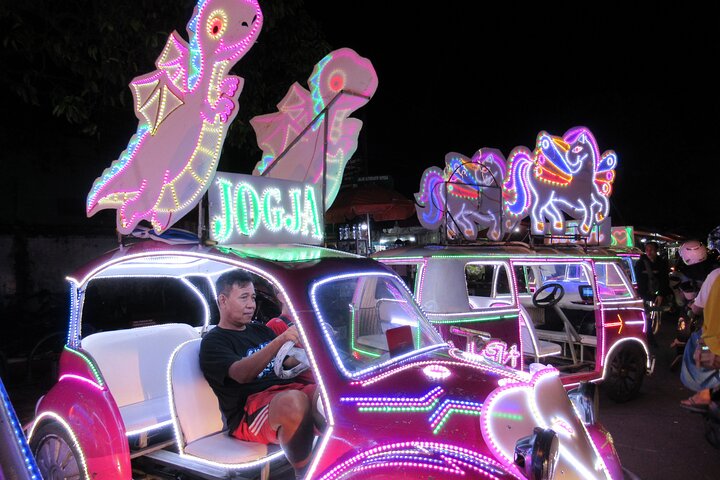
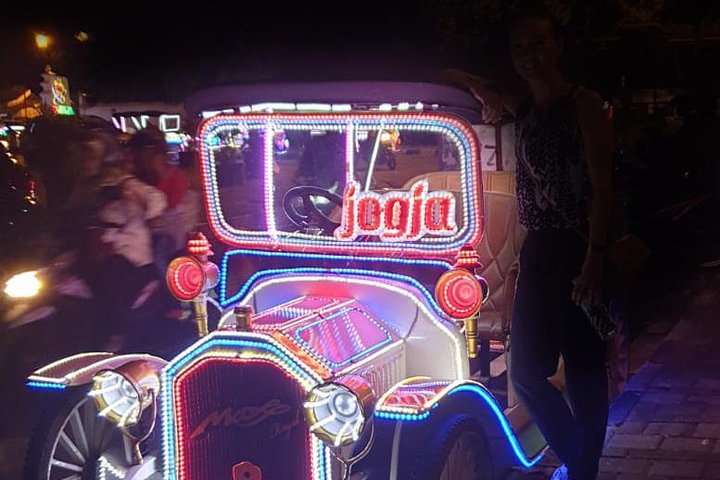
The tour ended at the Alun-Alun Selatan, the southern square, where we watched families ride the colourful pedal cars around the park. Andi explained that the square was once used for royal ceremonies and executions. Now it is a night market with fried snacks and children's toys. The contrast was not lost on m.
Who it is for: Travellers who want history and food in one efficient evening. People who enjoy walking and street food. Anyone who wants to understand how Yogyakarta's past shaped its present dining cultur.
Who it is not for: People who want to cook or learn recipes. This tour is about eating and listening, not doing. Also not ideal for anyone with mobility issues, as the walk covers about two kilometres over uneven lanes.
Yogyakarta Historical and Food Tour: The Experience
I have to be honest: the historical food tour gave me something the cooking class did not. It gave me context. I have lived in Yogyakarta my whole life, but hearing Andi explain how the Dutch sugar trade shaped the street food, or why the Chinese community's influence shows up in the sweet soy sauce, made me see my own city differently.
The food itself was excellent. The gudeg was from a place I had walked past a hundred times. The sate klathak, goat satay grilled on bicycle spokes, was from a stall near the Imogiri road. I had taken a French guest there once and watched her eat three portions. The bicycle spokes are not a gimmick, they conduct heat into the centre of the meat so it cooks evenly with just salt. Andi knew this and explained it without being asked.
The tour lasted about three hours. By the end I was full, slightly dusty from the walking, and carrying a mental map of the city's food history that I did not have befor.
Who it is for: History buffs who also love food. Evening travellers who want to use their dinner time productively. People who want to eat at stalls they would never find on their own.
Who it is not for: Anyone who wants to cook. Anyone who needs a sit-down restaurant meal with a chair and a table. This is street food on your feet.
The Moment I Made My Decision
I was sitting at the angkringan, drinking kopi joss, when I realised which tour I would recommend to a first-time visitor. The charcoal coffee was still glowing in the cup. The street was alive with students, becak drivers, and families. Andi was telling us about the 1945 independence struggle and how the angkringan became a meeting place for student activists because it was cheap and inconspicuous.
That was the moment I knew the historical food tour was the better choice for someone with limited time. It packs more context into fewer hours. You see the city, you taste its history, and you finish in time for a nightcap or an early bed. The cooking class is wonderful, but it demands a half-day commitment and a willingness to cook rather than observ.
If you have two days in Yogyakarta, do both. The cooking class in the morning, the historical food tour in the evening. They complement each other perfectly. The cooking class gives you the why of the food; the historical tour gives you the where and the when. Together they cover the full pictur.
But if you have only one evening, take the Yogyakarta Historical and Food Tour. You will leave with a fuller understanding of the city than any guidebook can give you.
What I Wish I'd Known Before I Went
Here are the things I learned the hard way, so you do not have to.
Cash is king. The cooking class market stop and the historical tour's food stalls all take cash. The nearest ATM can be a fifteen-minute walk. Carry small notes, IDR 20,000 and IDR 50,000. The angkringan nasi kucing costs IDR 3,000 a parcel. You cannot pay that with a card or a large not.
Book the cooking class ahead. The class caps at about six to eight people. I saw a couple turned away at the market because they had not booked. The Yogyakarta Cooking Class and Market Tour is popular and the small group sells out. Reserve online a few days befor.
Wear comfortable shoes for the historical tour. The walk covers about two kilometres over old stone lanes, uneven paving, and market floors. I wore sandals and regretted it by the second hour. Closed-toe shoes are better.
Do not eat lunch before the cooking class. You will cook and eat a full meal around 11 AM. The portions are generous. Skip breakfast or make it very light.
The historical tour is not for strict vegetarians. The food stops include chicken, goat, and shrimp paste. There are vegetable options at some stalls, but the tour is built around meat-heavy street food. If you are vegetarian, the cooking class is a better fit because you can request adjustments.
Both tours operate in the dry season (May to September) and shoulder months (April, October). In the wet season (November to March), the historical tour is fine in the evening because the rain usually comes in the afternoon. The cooking class market visit is covered, so it works year-round.
Ask questions. Both guides, Ibu Wati and Andi, are knowledgeable and happy to dig deeper. I learned more about Javanese cosmology from Ibu Wati's explanation of tumpeng than I had from years of guiding. Andi's history background meant he could connect the Dutch fort to the Chinese quarter to the sate stall in one flowing story. The tour is only as good as the questions you ask.
One more thing. If you take the historical tour, do not skip the kopi joss. It looks strange, a glowing ember dropped into black coffee, but it is a taste of Yogyakarta's working-class soul. The charcoal filters the bitterness and adds a faint smoky note. I have been drinking it since I was a child. It still reminds me of nights at the alun-alun with my father.
Explore More
Related comparisons and guides:
Photo Gallery
Frequently Asked Questions
Which tour is better for a first-time visitor to Yogyakarta?
If you have only one evening, the Yogyakarta Historical and Food Tour packs more context into fewer hours. If you have a full day, the cooking class gives you a deeper cultural understanding through hands-on cooking.
Can I do both tours in the same day?
Yes. The cooking class runs in the morning (around 6:30 AM to 11 AM) and the historical tour starts in the late afternoon (around 5:30 PM). You have a few hours between them to rest or explore. Just do not eat lunch between the two.
Are the tours suitable for vegetarians?
The cooking class is more flexible because you cook your own meal and can request vegetarian adjustments. The historical tour focuses on meat-heavy street food and is harder to adapt.
How much walking is involved in each tour?
The cooking class involves a short walk through the market (about 500 metres) and then you are in the kitchen. The historical tour covers about two kilometres over uneven lanes and market floors. Wear comfortable shoes for the historical tour.
Do I need to book in advance?
Yes for both. The cooking class caps at six to eight people and sells out. The historical tour also has limited group sizes. Book at least a few days ahead onlin.
What is the best season for these tours?
Both tours run year-round. The dry season (May to September) offers the most comfortable evenings for the historical tour. The cooking class market visit is covered, so it works in any weather. In the wet season (November to March), afternoon rain is common but both tours are scheduled to avoid it.
Yogyakarta Cooking Class and Market Tour
This is the tour I took when I wanted to understand the meaning behind Javanese food. You start at Beringharjo market learning to pick spices by smell, then cook tumpeng in a real home kitchen. The group is small (six people) and the guide, Ibu Wati, has been cooking since she was twelve. It is hands-on, cultural, and takes about four to five hours. Not for anyone short on time, but excellent if you want to learn why Javanese food is arranged the way it is.
Check Availability →Yogyakarta Historical and Food Tour
This evening walk is the one I recommend to travellers with limited time. It weaves through the old city, the Kauman district, and the alun-alun, with food stops at stalls that have been serving for decades. The guide, Andi, studied history at Gadjah Mada University and connects every dish to the city's past. You will eat gudeg, sate klathak, and nasi kucing, and drink kopi joss. It takes about three hours. Not for strict vegetarians, but perfect for anyone who wants to understand Yogyakarta's history through its food.
Check Availability →