Yogyakarta Historical and Food Tour: Honest Review & Tips
I Didn't Expect Yogyakarta, Indonesia to Feel Like This
I have lived in Sleman my whole life. I grew up with Merapi's silhouette in my window and the sound of gamelan drifting from the village hall on Saturday nights. When I started guiding in 2006, I thought I knew this city. I knew the temples, the palaces, the best time to photograph the eastern stairway of Borobudur's third terrace. But Yogyakarta has a way of showing you a new layer just when you think you have it figured out.
Take the food. For years I recommended the same warungs to my guests: Gudeg Yu Djum on Wijilan street, the sate klathak stalls in Imogiri, the angkringan carts near Tugu station. I knew the dishes well enough to name ingredients and point at a menu. But I did not understand how the city's history and its food were the same story told in different languages. Not until I walked it with someone who wove them together.
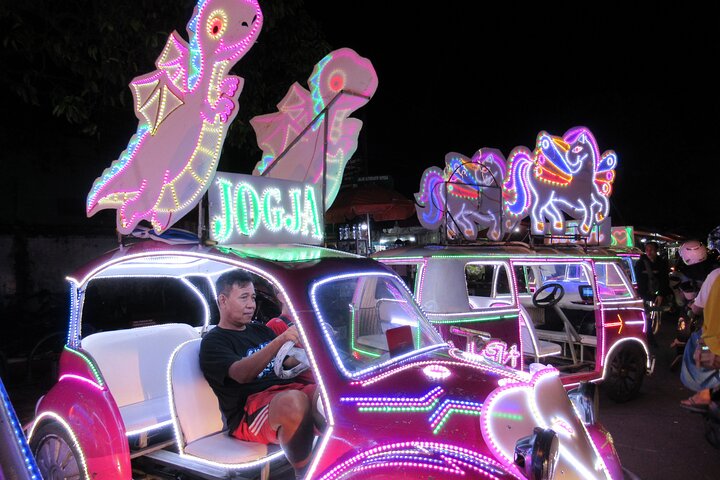
We earn a commission when you book through our links on Viator (PID P00303273), at no extra cost to you. This is how we keep the site free. Learn more →
That is what this review is about. Not a list of monuments or a ranking of noodle soups, but the experience of moving through Yogyakarta with a guide who treats the city as a living archive of flavours and stone. I booked the Yogyakarta Historical and Food Tour on a quiet Tuesday evening in July, and it changed how I talk about my own city.
Yogyakarta Historical and Food Tour: The Tour That Saved My Trip
The tour meets at 17:00 near the Kraton, just as the afternoon heat softens and the city starts exhaling. Our guide, a young man named Arif who studied history at Gadjah Mada University, did not start with a speech. He walked us toward the palace wall and pointed at the old Dutch cannon placements embedded in the stone. Then he talked about how the Javanese court survived colonialism not by fighting every battle, but by feeding the colonisers their own food back to them with a smile. That was the first clue that this was not a standard food walk.
Over the next four hours we moved through the night market at Malioboro, the back alleys of the Sosrowijayan district, and the old Chinese quarter near Ketandan. At each stop Arif explained the dish's origin through the city's history. The bakmi Jawa from a cart run by a third-generation vendor was not just noodles. It was a story of Chinese traders, Dutch spice routes, and Javanese palace cooks adapting wheat into something local. The gudeg from a tiny warung was a dish invented by court women using unripe jackfruit as a protein substitute during lean seasons of the Mataram Sultanat.
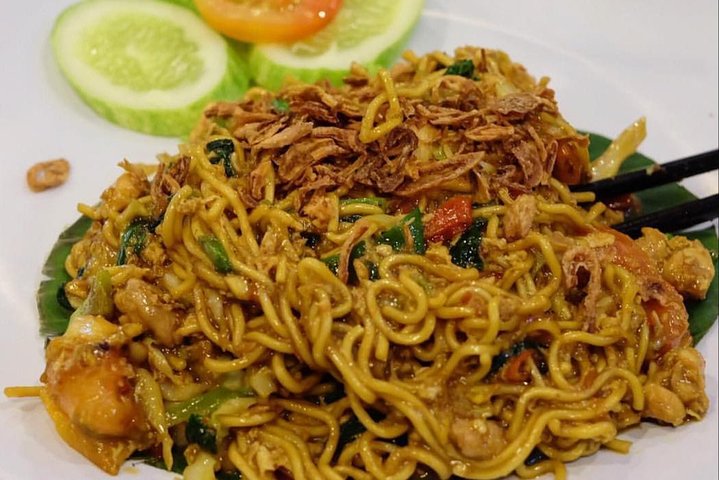
I had eaten gudeg a thousand times. I had never understood it as a document of survival.
The tour covers about two kilometres of walking, but it felt shorter because every step had context. We stopped at the Taman Sari water castle remnants, where Arif described how the sultan's concubines once bathed in pools fed by an aqueduct system, and then we ate klepon (palm sugar rice cakes) from a stall that has been there since the 1980s. The sweetness hit differently after standing in the same courtyard where royal women once gathered.
Who is this tour for? Travellers who want more than a checklist of temples. It is for people who ask why a thing is made the way it is, not just what it is. It is not for anyone who wants a quick dinner and a photo in front of the Kraton. You will walk, you will listen, and you will eat things that might look strange on the cart. If that sounds like effort, choose a simpler food tour.
But if you want to understand Yogyakarta through its stomach and its history at the same time, this is the one. I have been guiding temple tours for nearly two decades, and this tour taught me things about my own city I had missed.
The Moments That Made temple tours in Yogyakarta, Indonesia Worth the Trip
Yogyakarta's temples are the reason most travellers come. Borobudur, Prambanan, the smaller complexes scattered across the Kedu plain. I have walked those stones more times than I can count, and I still find new details. But the best temple tours in Yogyakarta, Indonesia are not the ones that rush you through the highlights. They are the ones that give you time to feel the place.
On a separate morning I took a group to Borobudur for the sunrise climb. We entered at the eastern gate at 04:30, before the quota filled. The sky was still dark, and the only sound was the soft shuffle of woven sandals on stone. As we climbed the terraces, I told them about my father's hands on the Karmawibhangga reliefs. He took me to the hidden base of the temple when I was twenty, two years into my guiding, and placed my palm on the covered panels of cause and consequence. "The carvers buried these on purpose," he said. "Some lessons are meant to hold up the whole structure from underneath." I had been rattling off dates and measurements to my groups like a schoolboy. That morning I understood the temple is an argument about how to live, not a list of numbers.
At the top, with the sun breaking over Mount Merbabu and the mist lifting off the valley, a guest from Canada asked me what I thought the builders wanted people to feel. I said I did not know for sure, but I thought they wanted people to walk inward and find stillness. That is what the temple does. It strips away the carved distractions of human desire as you climb, until you reach the bare stupas and the open sky. Two million stones, no mortar, ninth century. But the numbers are not the point.
For Prambanan, I have a different rhythm. I enter from the north end and walk straight to the Sewu Buddhist complex before the tour buses crowd the main Shiva temple. Then I return. The contrast between the two temples, standing less than a kilometre apart, tells you something true about old Java: faiths shared the same plain. The Ramayana reliefs on the inner balustrade of Prambanan are worth reading slowly. Do not just photograph them. Let the story unfold panel by panel.
Jomblang Cave: A Lesser-Known Tour Worth Discovering
Not every tour in Yogyakarta involves ancient stone. Some involve descending into it. Jomblang Cave, about an hour south of the city, is a vertical sinkhole that drops sixty metres into a collapsed underground river chamber. I have taken guests there more times than I can count, and I still get a small knot in my stomach before the rope descent.
On a morning in 2019, I took an Australian family down into the cave. The sky had been grey all morning, so I warned them the Heaven's Light might not show. We reached the Grubug chamber and waited. Just past eleven the clouds tore open and the beam dropped through the cave roof like something poured. The youngest, maybe ten, whispered that it looked like the cave was breathing light. I have descended that rope hundreds of times and I still got the chills.
Jomblang is the one tour where I cannot promise the magic, and I would rather say so. You harness up, you drop on a rope into the green sinkhole, and then you wait in the dark for the sun to do its work. On a clear morning around eleven, a single beam falls through the cave roof and the whole cavern seems lit from heaven. On a cloudy afternoon, it is a damp, beautiful, ordinary cave. That is why you book the morning slot days ahead and watch the forecast. Nature does not take reservations. The daily cap is tiny, and the slot is everything. A booking made a week out beats a five-star review left by someone who got lucky on the weather.
If you want to pair Jomblang with something lighter, Pindul Cave tubing is a short drive away. You float on an inner tube through a river cave with stalactites overhead. Life jackets are provided, and it is fine for non-swimmers. Cash only at the village. Bring small notes.
What Really Surprised Me About Yogyakarta, Indonesia
I thought I knew the city. But the food tour surprised me most. Not because the food was new (I grew up eating it), but because of how the guide connected each dish to a historical moment. The kopi joss with its glowing charcoal, served from a cart near the train station, was not just a novelty. It was a working-class invention from the 1950s, when coffee was expensive and vendors stretched it by adding charcoal to neutralise bitterness. The nasi kucing (cat rice) in its tiny banana-leaf portion was designed for students and becak drivers who could not afford a full meal but could buy three small portions and talk all night.
I once took a solo backpacker on a night food walk. She was nervous about the angkringan carts, the tiny portions, the unfamiliar look of the charcoal coffee. I told her this is where students and becak drivers actually eat, that the small portion is the point. By the second glass of kopi joss she was trading jokes with the stall owner in broken Indonesian. She messaged me a year later that it was her favourite night in Asia.
The everyday, unglamorous spots win travellers over precisely because they are real. Do not over-polish the itinerary. Leave room for the cart on the corner, the stall that has been there since the 1980s, the vendor who remembers when the street was dirt.
Another surprise: how many travellers try to do too much in one day. I have seen guests attempt Borobudur, Merapi, and Prambanan in a single day. It is doable but it is a 12-hour march. You end up rushing the temple you came for. Pick two. Give each the time it deserves. Borobudur alone needs at least three hours if you walk the galleries properly. Prambanan needs two, plus another hour for Sewu. Merapi is a half-day on its own. The driving between them eats time. Accept that you will not see everything, and you will see mor.
Rama Kusuma's Insider Tips for Getting It Right
After twenty years of guiding, I have learned what works and what does not. Here is the short version.
Book Borobudur's climb-to-the-top ticket online days ahead. The daily quota is small and fills early. Turning up hoping to climb often means you only get the courtyard ticket and stare up at the terraces from the lawn. Since 2023 the terraces need a capped timed ticket and the special woven sandals. A local guide is required for the terraces. Plan for it.
Setumbu Hill sunrise and the Borobudur climb are two separate paid sites. Many travellers think the hill photo is Borobudur access. It is not. Setumbu is about four kilometres west of the temple, with its own gate and ticket. If you want both the hill silhouette and the temple climb, pay for both and give each its own morning.
On a clear dry-season morning, skip Setumbu Hill and shoot from the temple terraces instead. The light hits the stupas directly. Reserve Setumbu for when you specifically want the misty silhouette layered with the volcano behind.
Buy the combined Borobudur plus Prambanan ticket if you are doing both within 48 hours. It is cheaper than two separate foreigner tickets, and the operators rarely volunteer this. Ask at the first gat.
For Jomblang, the slot is everything. The Heaven's Light only shows mid-morning on sun, and the daily cap is tiny. A booking made a week out beats a five-star review left by someone who got lucky on the weather.
Merapi jeep tours are priced per jeep, not per head. Two people pay the same jeep rate as four. A couple should join others or accept the higher per-person cost. Do not assume you are being overcharged.
Carry cash in small notes for Gunungkidul and Merapi. Cave villages, jeep crews, warungs, and parking men do not take cards. The nearest reliable ATM can be an hour back toward the city.
Gojek and Grab work well inside the city but get patchy and expensive out at the temples, caves, and volcano. For day trips beyond the ring road, a hired car-and-driver is cheaper than stacking app rides. Negotiate the full day, not each stop. Agree the route, the wait time, and the total price up front in writing on your phone. Renegotiating at every temple gate sours the whole day.
The Ramayana Ballet's open-air theatre (lit temple as backdrop) only runs in the dry season. In the wet months it moves indoors. Beautiful, but if the outdoor stage is your reason to go, check which venue is scheduled before booking.
For Bromo-Ijen, choose the drop-in-Bali itinerary only if you actually want to end in Bali. If you are returning to Yogyakarta, the round-trip versions exist and save you a one-way flight back.
Visit the Prambanan complex from the back. Walk to Sewu temple first thing while the tour buses crowd the main Shiva temple, then return. You get the headline temple with thinner crowds an hour later.
Ijen's gas mask is not a souvenir prop. The blue-fire vent fumes genuinely sting and choke. Stay upwind, follow the miners' read of the wind, and do not chase the photo into a gas pocket.
Sunrise tours quote the pickup time, not the start time. A Borobudur sunrise pickup at 03:30 means an hour-plus drive in the dark. Eat something first, because nothing is open at that hour out there.
Dieng is cold. Travellers pack for tropical Java and then shiver through the Sikunir pre-dawn climb. Bring a real jacket. Single-digit Celsius mornings are normal at 2,000 metres.
Domestic and foreigner ticket prices differ sharply at the big temples. This is official and posted, not a scam. Do not argue with the cashier about it. Just budget the foreigner rat.
Friday mornings at the Kraton and some palace sections can have restricted hours for prayers and ceremonies. Check the day before rather than building your only afternoon around it.
What I Wish I'd Known Before I Went
I have guided hundreds of travellers through Yogyakarta, and I still learn something new every season. Here is what I wish every first-time visitor knew before they arrived.
Expecting to walk up Borobudur freely like the old photos will disappoint you. Since 2023 the terraces need a capped timed ticket and special sandals. People arrive with the climb as their whole plan and find it sold out. Book ahead.
Treating Setumbu Hill as inside Borobudur is a common mistake. People pay for the hill sunrise, then are surprised there is a second, larger ticket for the temple itself a few kilometres away. Plan for both or choose on.
Trying to do Borobudur, Merapi, and Prambanan as a relaxed day is a trap. It is doable but it is a 12-hour march. You will rush the temple you came for. Pick two.
Going to Jomblang without a reservation and a weather check is a gamble you will probably lose. The Heaven's Light is a sun-and-timing phenomenon. Show up cloudy at 2 pm and you have descended 60 metres to see a dim cave.
Wearing white shoes and good clothes to the Merapi jeep tour is a mistake you make once. The 2010 lava tracks are black volcanic dust. You come back coated. Sandals and clothes you do not love are the move.
Booking a Bromo Ijen Bali 3-day trip while planning to fly home from Yogyakarta will leave you stranded on the wrong side of Java. The drop-off is in Banyuwangi or Bali. If you are returning to Yogyakarta, book the round-trip version.
Climbing toward the Ijen blue fire without the gas mask actually on is dangerous. Tourists pull it off for photos at the vent and get a lungful of sulfur dioxide. It is not the place to be casual.
Saving Prambanan for late afternoon in the wet season and getting rained out is not the temple's fault. Morning visits dodge the typical afternoon storms.
Assuming cards work everywhere will cost you time and stress. At Pindul, Gunungkidul warungs, jeep crews, and parking, it is cash only. Carry small notes.
Underdressing for Dieng or the pre-dawn volcano starts is a mistake you feel in your bones. People in shorts and flip-flops at a 2,000 to 2,900 metre sunrise are genuinely miserable and sometimes turn back. Bring a real jacket.
Photographing the Ijen sulfur miners as scenery and walking past misses the point. A few words and a fair tip, or buying a small carved sulfur souvenir, changes the encounter from intrusion to exchange.
Booking the cheapest sunrise temple package and discovering it is a Setumbu Hill view, not temple access, leads to arguments at the gate. Read what climb to the top versus sunrise from the hill actually includes.
One last thing. The people who work these sites know more than any guidebook. I once got so absorbed framing a stupa against the dawn that I left my tripod on the upper terrace and only realised at the bus. A young attendant ran it down to me. Instead of just thanking him, I asked how he learned the light here. He had grown up in the village below. We still trade sunrise notes by message years later. Curiosity about the people who work a place opens doors no ticket does.
Yogyakarta is not a checklist. It is a city that rewards patience, curiosity, and the willingness to eat something from a cart without asking what is in it first. Come with time, come with cash, and come ready to walk. The temples will wait. The food will be hot. The mountain will be there in the morning.
Frequently Asked Questions
Is this tour suitable for beginners?
Most tours on this site welcome beginners. Check the individual tour page for difficulty ratings and fitness requirements.
Is the Yogyakarta Historical and Food Tour suitable for vegetarians?
Yes, but tell the operator in advance. The tour includes several vegetable-based dishes like gudeg, tahu gejrot, and various sambals. Meat features in some stops but substitutions are common if requested ahead.
How long does the Yogyakarta Historical and Food Tour take?
The tour runs about four hours, from 17:00 to 21:00. The walking distance is roughly two kilometres with multiple stops. Pace is relaxed, and there are benches at most food stops.
Can I combine the food tour with a temple visit the same day?
Yes, if you visit a temple in the morning or early afternoon. The food tour starts at 17:00, so you have time for one temple visit before it. I recommend Prambanan or the Kraton area, both close to the meeting point.
What should I bring on the food tour?
Cash in small denominations (IDR 20,000 to 50,000 notes), a water bottle, and an appetite. The tour includes all food and drink, but you may want extra cash for snacks at the night market afterward. No special footwear needed.
Is the food tour suitable for children?
Yes, but the walking and late hour may tire younger children. The food is mild by Indonesian standards, though some dishes include chilli. The guide can adjust portions. Best for ages 10 and up.
How does the Yogyakarta Historical and Food Tour compare to a standard food walk?
Standard food walks focus on eating. This tour weaves the city's history through each dish, explaining the colonial, royal, and trade influences behind the food. You learn why a dish exists, not just what it tastes like.
Photo Gallery
Explore More
Related comparisons and guides:
Yogyakarta Historical and Food Tour
This 4-hour evening walk blends heritage sites, the night market, and food stops into one coherent story. The guide connects each dish to a historical moment. The food is good, but the context is what makes it stick. Not for anyone who wants a quick dinner and a photo. Best for travellers who ask why a thing is made the way it is.
See dates & prices →