Yogyakarta Cooking Class and Market Tour vs Yogyakarta Historical and Food Tour: Which One Should You Choose?

We earn a commission when you book through our links on Viator (PID P00303273), at no extra cost to you. This is how the site stays free. Learn more →
The Short Answer: Who Should Book Which
Book the Yogyakarta Cooking Class and Market Tour if you want to use your hands. The listing describes an early visit to a traditional market, then cooking tumpeng yellow rice with a chef, with your creations served at lunchtime. Book the Yogyakarta Historical and Food Tour if you would rather walk, ride a becak and eat dinner while a guide tells the stories behind the food, all in a three-hour evening slot. Both listings run 180 minutes, so you are really choosing between morning and evening, and between cooking and a guided food outing. If you want a longer class, the five-hour Yogyakarta Cooking Class adds grinding the spices yourself, but it has no traveller reviews yet.
I should be clear about where my view comes from. This comparison draws on the three Viator listings. What I add is what I know of my own city, its food and how a day here actually goes. I do not run a tour company or sell packages; I read listings and explain which fit. You can read more about my background on my about page.
The Cooking Class and Market Tour: A Morning at the Market and the Stove
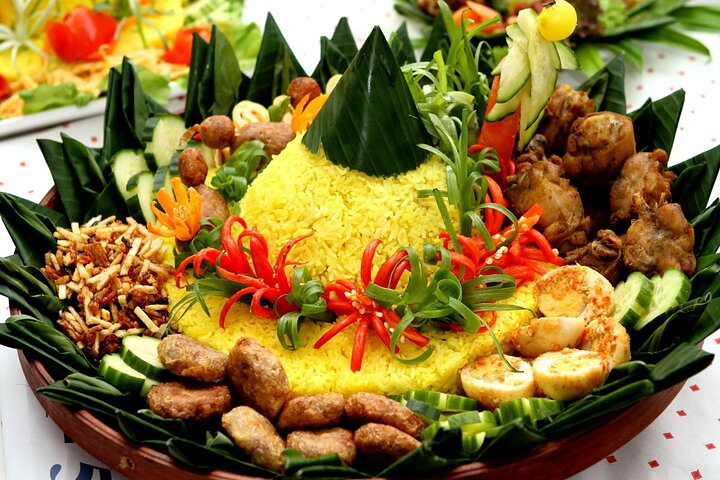
The listing describes an early start with a morning visit to a traditional market to buy ingredients. A chef helps you get to know Indonesian spices and herbs. After a short briefing and a handbook, the cooking starts. The dish named is tumpeng, the yellow rice that the listing describes as a ceremonial offering from long ago. Your food is served at lunchtime with more insights and reviews. You get homemade hibiscus tea or wedang uwuh to drink. The listing describes wedang uwuh as a eucalyptus drink.
Yogyakarta Cooking Class and Market Tour: Who It Suits
Tumpeng makes sense as the named dish. It is a cone of turmeric yellow rice traditionally served at Javanese ceremonies and thanksgivings, and Yogyakarta cooking classes frequently teach it. If you want to see how food and ceremony connect in Java, cooking this dish gives you a reason to ask about that connection while you work.
Who should pick it: travellers who like to cook and prefer a morning market visit followed by cooking, with their creations served at lunchtime. The market visit also helps anyone who wants to recognise Javanese spices and herbs before shopping on their own later. It has been reviewed by more travellers than the evening tour, 114 against 15, which tells you a lot of people have been through this format. It is listed from $35.
Who should skip it: late risers, anyone whose mornings are taken up by temple sunrise trips, and travellers who would rather eat out than cook. The listing gives no pickup details, so if you are staying away from the centre, find out where it starts before you book.
Yogyakarta Cooking Class and Market Tour
From $35 · Price checked: Oct 2026
Suits: Travellers who want to shop a morning market, cook tumpeng with a chef and have their creations served at lunchtime
Skip it if: Travellers who sleep late, have sunrise trips booked or would rather eat out than cook
An early traditional market visit for ingredients, a briefing and handbook, then cooking tumpeng yellow rice with a chef. Lunch is served with hibiscus tea or wedang uwuh.
Check availabilityExternal booking on Viator · pricing and cancellations handled by Viator
A Longer Option: The Five-Hour Yogyakarta Cooking Class
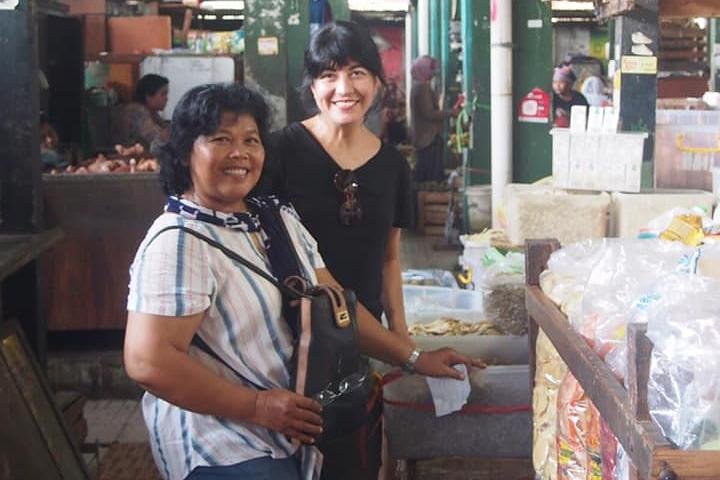
The second class on this page is the Yogyakarta Cooking Class taught by ibu Herni, listed at five hours from $70.77. Its listing says the class starts with buying ingredients at the local market, where it mentions local products such as ten kinds of rice. Ibu Herni then explains the recipes while you have tea or coffee, and you grind the spices yourself in the traditional way before cooking. The listing does not name the dishes, so ask for the menu before you book.
Who should pick it: travellers who want more time in the kitchen and like the idea of grinding spices by hand. Who should skip it: anyone short on time, because it runs five hours, two hours longer than the Cooking Class and Market Tour, so check its confirmed start and finish times against your other plans. It also does not suit anyone who wants a review history before booking, because it has no traveller reviews yet.
Yogyakarta Cooking Class
From $70.77 · Price checked: Oct 2026
Suits: Travellers who want to shop the market and cook the dishes themselves.
Skip it if: Anyone who wants an evening of eating and walking rather than kitchen time.
A five-hour cooking class listed from $70.77, starting with a market shop for ingredients. It has no traveller reviews yet, so judge it on the menu and the market stop.
Check availabilityExternal booking on Viator · pricing and cancellations handled by Viator
The Historical and Food Tour: An Evening of Walking, Becak and Dinner
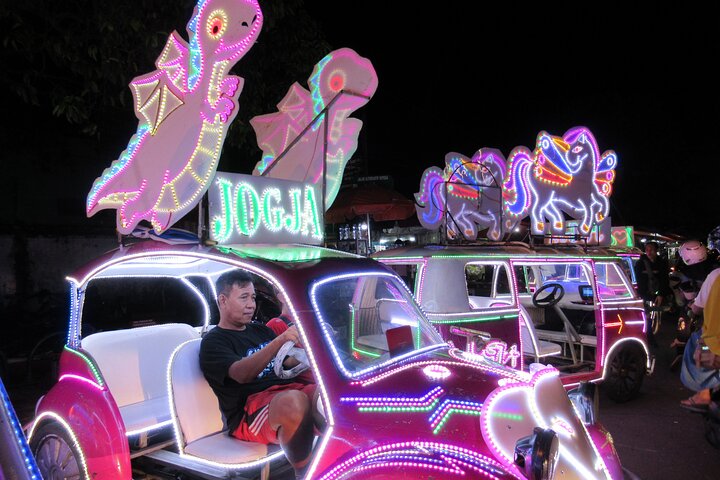
The listing describes a three-hour evening walk through the city centre, a night market, heritage sites and a night park. The idea is that the food represents the city's history and cultural symbolism, and that there is always a story behind the culinary side. Part of the route is covered by becak, the pedal trishaw. Dinner comes with more than one menu option and traditional drinks, and the tour finishes with activities at a night park. The listing also says the menu is selected based on dietary requirements, which matters if you have restrictions.
Yogyakarta Historical and Food Tour: Who It Suits
I care about the history framing because of something my father taught me. He guided Borobudur for thirty years. Around 2008, two years after I started guiding at twenty, he took me to the hidden base where the covered Karmawibhangga reliefs sit. He put my hand on the stone and told me the carvers had buried those panels of cause and consequence on purpose. Until then I had been reciting dates and measurements to my groups like a schoolboy. That morning I understood that the temple is an argument about how to live, not a list of numbers. Food in Jogja works the same way. A plate of gudeg, young jackfruit slow-stewed in coconut milk and palm sugar until sweet and brown, is easy to eat and forget. It means more once someone explains why the city is nicknamed 'Kota Gudeg'.
The listing does not name specific stalls or dishes, and it does not say how the three hours divide between walking, dinner, the becak ride and the night park. Angkringan stalls serve small nasi kucing portions as an everyday supper, and kopi joss is black coffee with a glowing lump of charcoal dropped into it. Do not book this tour expecting gudeg or either of these unless the operator confirms it. If you have a particular dish in mind, ask.
Who should pick it: travellers who only have evenings free, first-timers who want to get their bearings early in the trip, anyone curious about the stories behind the city's food, and diners with dietary needs, given what the listing says about menu selection. It also suits people who would rather not spend their holiday time cooking. It is listed from $28.34.
Who should skip it: anyone who wants to cook or does not enjoy evening walks. If walking is hard for you, ask the operator about distance and pace, because the listing does not say how much of the route is on foot. It also has a much smaller review base than the Cooking Class and Market Tour, so read what the reviews say rather than relying on the count alone. I go through it in more detail in my full review of the Historical and Food Tour.
Yogyakarta Historical and Food Tour
From $28.34 · Price checked: Oct 2026
Suits: Travellers with free evenings who want food stories, a becak ride and dinner while walking the city
Skip it if: Travellers who want to cook or prefer to avoid evening walks
A three-hour evening walk through the city centre, a night market, heritage sites and a night park, with a becak ride. Dinner menus are selected around dietary requirements, and traditional drinks accompany dinner.
Check availabilityExternal booking on Viator · pricing and cancellations handled by Viator
Where the Cooking Classes and the Evening Tour Differ
Cooking or a guided food outing. The Cooking Class and Market Tour listing names tumpeng; the evening listing offers dinner menu options. Neither specifies the number of dishes you will prepare or eat.
What you take home. From the class you get a handbook and some practice with Javanese spices and herbs. From the evening tour you get a sense of how the city centre, its night market and heritage sites fit together, which helps if you plan to eat on your own for the rest of the trip.
I learned to judge this kind of difference from my father, though at a temple, not a kitchen. Around 2008, two years into my guiding, he took me to the hidden base of Borobudur, to the covered Karmawibhangga reliefs, and put my hand on the stone. Until then I had been rattling off dates and measurements to my groups like a schoolboy. That morning I understood the temple is an argument about how to live, not a list of numbers. Food in Jogja deserves the same attention. Whichever tour you choose, pick the one where you will ask the most questions, because that is where the meaning is.
Doing Both, and Fitting Them Around Temples and Volcanoes
Since one starts in the morning and the other runs in the evening, you can do both on the same day, with an afternoon rest in between. If you have the time, it works well. The cooking class puts spices, herbs and a ceremonial dish in your hands, and the evening tour puts food back into the streets and history of the city.
The clashes to watch for are with the big day trips. A Borobudur sunrise trip can mean a 03:30 pickup and an hour-plus drive. Check its return time against the cooking class's confirmed start time before combining them. In the same way, the Ramayana Ballet at Prambanan starts around 19:30, so it competes with the evening food tour for the same night. Choose one per evening. A Merapi lava jeep sunrise departure around 04:30 is another early start to check against a morning class.
If you are building a short trip, my Yogyakarta 3-day itinerary shows where a morning class or an evening food walk fits around the temples. If you want to compare these two with other food options in the city, start with my Yogyakarta food tours overview.
Practical Notes: Timing, Cash, Arrival and Eating Afterwards
Seasons. Yogyakarta has a dry season roughly May to September and a wet season roughly November to March. Both cooking classes centre on a market visit and cooking. The evening tour is on foot and by becak, and none of the three listings says what happens in heavy rain, so pack a light rain layer in the wet months. My best time to visit guide covers the seasons in more detail. Java runs on WIB, UTC+7, with no daylight saving, so check your booking time against that.
Cash. The rupiah has traded around IDR 15,500-16,000 per US dollar. The large notes look alarming, but the most useful small notes are IDR 2,000 and 5,000. Carry some IDR 2,000 and 5,000 notes for small purchases.
Arrival day. Yogyakarta International Airport is about 40 km west of the city, around 1-1.5 hours by road. Do not book the evening tour on a tight flight connection. If you come by train, Tugu station is central. Malioboro, the main commercial street, runs north from near the Kraton, but neither street tells you where a tour meets. See getting around Yogyakarta for transport within the city.
The Kraton. If you want to see the palace by day before an evening tour, check opening hours and performances on the official Kraton Jogja site. The food tour listing mentions heritage sites but not palace admission, so plan a Kraton visit separately.
Eating. Keep breakfast light before the Cooking Class and Market Tour, because its listing says your creations are served at lunchtime. Before the evening tour, skip a big late lunch, since the listing includes dinner.
On your own afterwards. If either tour makes you want more, Wijilan street, just east of the Kraton, is the traditional gudeg alley. Many warungs there open from midday into the evening, and some stay open around the clock. A plate costs roughly IDR 20,000-40,000, so bring cash. Gudeg Yu Djum, a well-known name, has several outlets, including the original near Wijilan. Angkringan stalls serve everyday suppers of nasi kucing, skewers and tea, and the original kopi joss stalls are near Tugu station. Sate klathak, goat grilled on iron bicycle spokes and seasoned with salt, belongs to the Imogiri area south of the city. Bakpia are small round pastries traditionally filled with sweet mung bean, originating in Pathuk; Bakpia Pathok 25 is a well-known brand.
What to Check Before Booking
- Morning or evening free Check which part of the day you have free. The Cooking Class and Market Tour starts with a morning market visit, the five-hour class does not state a start time, and the historical tour takes an evening.
- Meeting point None of the three listings gives pickup details. Confirm where each tour starts and how you will get there from your hotel.
- Dietary needs The historical tour listing says menus are selected based on dietary requirements. Neither cooking class listing mentions it, so ask before booking.
- Clashes with day trips Make sure a sunrise temple pickup or a Ramayana Ballet evening does not fall in the same slot as your food tour.
- Specific dishes The Cooking Class and Market Tour listing names tumpeng, and the five-hour class names no dishes. None of the listings promises gudeg or kopi joss, so ask the operator if either is important to you.
- What the class actually teaches Confirm which preparation tasks you do yourself, whether you take recipes home and how the class fits around your other plans.
- Small cash Carry some IDR 2,000 and 5,000 notes for small purchases.
Explore More
Related guides:
Frequently Asked Questions
Can vegetarians or people with allergies join?
The Historical and Food Tour listing says its menu is selected based on dietary requirements and offers more than one dinner option. Neither cooking class listing mentions dietary needs, so message the operator before booking.
Is hotel pickup included?
None of the three listings gives pickup information. Assume you may need to reach a meeting point yourself and confirm the details when you book.
Can I do both tours on the same day?
Yes, if the confirmed times allow. The Cooking Class and Market Tour and the Historical and Food Tour each run 180 minutes, one starting in the morning and one in the evening, so a single day can hold both with a rest in the afternoon. The five-hour class leaves less room, so check its confirmed start and finish times first. Avoid stacking them on a day with a very early sunrise pickup.
What is tumpeng?
Tumpeng is a cone of turmeric yellow rice traditionally served at Javanese ceremonies and thanksgivings. Yogyakarta cooking classes frequently teach it, and the Cooking Class and Market Tour listing describes it as a ceremonial offering from long ago.
Is the Yogyakarta Historical and Food Tour good for first-time visitors?
I would consider it for an introduction to food and cultural context. Its listing describes an evening guided activity combining city walking, dinner, traditional drinks, a becak ride and night park activities.
Where can I eat gudeg on my own after the tour?
Wijilan street, just east of the Kraton, is the traditional gudeg alley, lined with long-running warungs. Gudeg Yu Djum has an original outlet near Wijilan. Bring cash and check your chosen outlet's hours.
Written from Sleman, Yogyakarta.
Rama Kusuma
Sleman local · guiding Borobudur and Prambanan since 2006