Yogyakarta 3-Day Itinerary
Three days matched to three moods. The temples, the volcano, the food — and a third day you choose. No sales pitch, just the honest shape of the days, with the exhaustion left in.
Three days is the right number for Yogyakarta. Two days is a sprint that misses something important. Four is a luxury most travellers do not have. Three lets you do the thing everyone comes for — Borobudur and Prambanan, the two UNESCO temples — and the thing most people talk about long after — Merapi's black dust and the street food that runs late into the night — and then a third day you shape to your own mood. Below is the itinerary I would give a friend flying in for a long weekend. It is honest about early starts, about driving times, about when you will be tired and when the tired is worth it. If climbing to the top of Borobudur is the thing you came for, start with the guaranteed ClimbUP tour (4.96★) — it locks your summit slot in writing and removes the quota gamble I warn every traveller about.
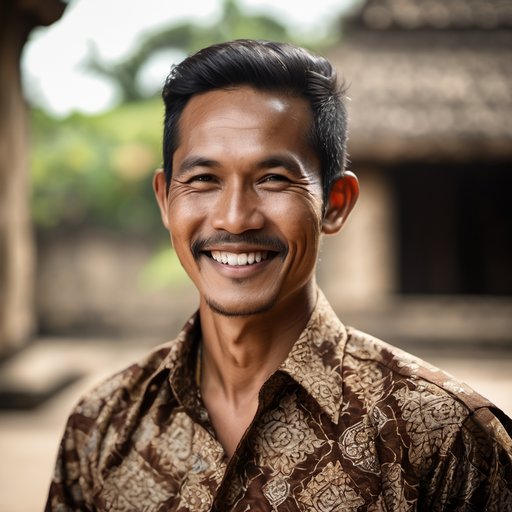
My name is Rama Kusuma. I have been guiding these routes for twenty years, and every day below is a day I have built for real travellers. The times are honest. The driving legs are real. And the third day offers three different moods because I have learned that by day three, different travellers want different things, and forcing everyone into the same cave or the same bicycle saddle is how people end up resenting a perfectly good morning.
This site is not a tour company. I do not run vans or sell packages. What I do is read the listings the way a guide reads them and tell you which ones fit what you actually came to feel. I earn a commission when you book through the Viator links on this page, at no extra cost to you — that is how the site stays free.
Day 1 — The temples: Borobudur sunrise, then Prambanan
Start: 03:30 pickup. Yes, that early. Yes, it hurts. Yes, it is worth it.
Your first day opens the way every first day in Yogyakarta should open: in the dark, heading northwest toward Magelang, with the Kedu plain still sleeping. If the weather holds, you will watch the mist lift off the rice fields from Setumbu Hill while Borobudur sits as a silhouette below, the volcanoes — Merapi and Merbabu to the east, Sumbing and Sindoro to the northwest — stacked behind it on a clear morning. Then you come down and climb the temple itself, walking the galleries clockwise the way the ninth-century builders meant you to, up through the world of carved desire toward the seventy-two bell-shaped stupas and open sky at the summit.
The Borobudur sunrise, Merapi volcano and Prambanan full-day tour (4.91★, 1,082 reviews) is the one I would book for this day, because it threads Setumbu Hill, the Borobudur climb, and Prambanan into a single sweep, and it has been ridden by more travellers than any other temple tour I know. It also includes Merapi in the middle, but on a three-day itinerary I would ask the operator if you can swap the Merapi jeep for a longer pause at Borobudur, or simply accept that the jeep will be a quick stop, your real volcano day is tomorrow. The listing states the Borobudur climb ticket is included — confirm this when you book, because it is the difference between walking the terraces and staring up at them from the lawn.
You will reach Prambanan in the afternoon, likely tired, and the afternoon heat will be working against you. Walk to Sewu temple first, the Buddhist complex at the north end of the park, while the tour buses crowd the main Shiva temple. Circle back to the soaring Hindu spires an hour later and you will have them almost to yourself, thinner crowds, better light, and the Ramayana reliefs raked sideways by the late sun. This is a twelve-hour day, not a relaxed outing. You will be spent by the evening. Eat something simple near your hotel and sleep hard.
Honest notes on exhaustion: with a 03:30 pickup you are awake for roughly sixteen hours by the time you sit down to dinner. The drive from Borobudur to Prambanan is about an hour and a half, and the temple courtyards are open stone with limited shade. Bring water, wear layers you can peel off as the morning warms, and do not book a late dinner you will be too tired to enjoy. The temples reward slowness, but you only have so much slowness in you after a pre-dawn start. Give the morning to Borobudur and let Prambanan be whatever it is.
Day 2 — The volcano: Merapi jeep morning, then food at night
Start: 04:30 pickup. Earlier than you want, later than yesterday. You will not feel rested. Go anyway.
The second day is two completely different halves, and that is the point. The morning is the Merapi lava jeep tour, bouncing across the black pyroclastic tracks in an open-sided 4WD through the Kaliurang and Kaliadem zone on the mountain's southern slope. The route strings together the concrete bunker where people sought shelter from the heat, the Museum Sisa Hartaku — a survivor's house left as the 2010 eruption found it, with melted clocks frozen at the hour the pyroclastic cloud came through — and Batu Alien, the enormous boulder the eruption hurled down the valley. You are not climbing to the crater. You are riding through the ground the eruption rearranged, and the jeeps are rough and dusty and deliberately so.
The Private Merapi Volcano 4WD Jeep Tour (4.84★, 56 reviews) is the straightforward volcano-only choice — a private jeep with a driver who knows the pyroclastic tracks, visiting the bunker, the museum, and Batu Alien without being rushed off the mountain for a temple schedule. If you prefer the safety of a larger crowd and a clean 5.0 rating, the Borobudur, Merapi Jeep and Prambanan day tour (5.0★, 33 reviews) also runs the lava route but you would tell the operator you only want the Merapi portion, since you already did the temples yesterday. Either way, you are back at your hotel by midday, covered in volcanic dust.
Shower. Nap. Change your clothes, the morning ones are grey. Then the evening is a different creature entirely.
The second half of Day 2 is the food. Yogyakarta comes alive after dark, and the small-group walking and food tour by night (4.96★, 332 reviews) is the one I would book. It is capped at eight travellers and threads the angkringan stalls, the gudeg warungs, the street skewers, and the late-night nasi kucing — the little "cat-rice" portions that students and becak drivers eat at the low stalls near Tugu station, where the kopi joss comes with a glowing charcoal dropped into the cup. This is the real Jogja night, not a restaurant with a menu. You sit on a mat, order three small plates, and let the evening go long. If you would rather cook than eat, the Yogyakarta cooking class and market tour (4.96★, 103 reviews) starts at a local market and teaches tumpeng, the ceremonial yellow rice cone, with the cultural context behind the food — a different kind of evening but just as real.
Honest notes on exhaustion: you are on your second early start with less sleep than you think. The jeep is physically bouncy, not restful, but the food tour is a gentle walk. Do not try to add a temple to this day. The volcano morning and the food evening are the whole day, and together they give you exactly what Yogyakarta is: raw and ancient by daylight, cheap and warm and full of smoke by night.
Day 3 — Choose your adventure
By the third day, travellers split three ways. Some want one more physical push — a cave descent, a mountain sunrise. Some want to slow all the way down and pedal through rice fields. And some want a quiet temple morning, no rush, a slow finish. All three are good. The mistake is picking the wrong one for your mood. Here is how to choose.
Option A: The caves — Jomblang descent and Pindul tubing
For: the traveller who wants one more shot of adrenaline before they leave. Start: 07:00 pickup. Return: late afternoon.
You drive southeast into Gunungkidul, the karst limestone country, and the day opens with Jomblang Cave. You harness up at the rim of a green sinkhole, and a crew lowers you roughly sixty metres on a single rope into the forest floor below. You walk through a connecting passage into the Grubug chamber, and if the sky is clear and the hour is right — roughly ten to noon — a single beam of sunlight drops through the cave roof and the whole cavern lights from above. The locals call it Cahaya Surga, heaven's light, and the name is not an exaggeration.
After Jomblang, you drive a short way to Pindul Cave for the gentle half. You float on an inner tube down an underground river about three hundred metres long, through chambers of stalactites and a resident bat colony, life jacket on, the current doing the work. It is cool, dark, and after the rope descent, exactly the exhale you need. The Jomblang Cave and Pindul Cave tour (4.96★, 28 reviews) is the cleanest pairing of the two — Jomblang harness, rope crew, and boots included, Pindul tube and life jacket, with transport from the city.
The honest catch: Jomblang has a strict small daily cap, commonly around twenty-five visitors in the prime late-morning window. If you want the light beam, book days ahead and watch the weather. A cloudy day means a dim cave. The rope descent is non-negotiable — if sixty metres on a harness makes your stomach turn, this is not your day, and that is a perfectly sensible thing to know about yourself. The drive to Gunungkidul is about an hour and a half each way. Carry cash in small notes; the cave villages, warungs, and parking men do not take cards.
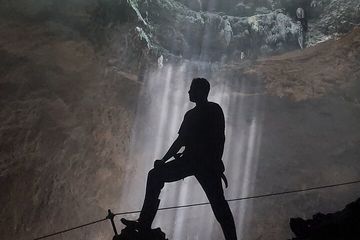
Jomblang Cave and Pindul Cave Tour from Yogyakarta
The focused two-cave day: the sixty-metre rope descent into Jomblang's sinkhole, the wait in Grubug chamber for the light beam, then the gentle inner-tube float through Pindul's underground river. High adventure, easy reward. The daily cap on Jomblang means you must book ahead — the tour handles the slot.
See dates & prices →Option B: The cycling — Kotagede or the Menoreh rice fields
For: the traveller who wants slow, quiet, real. Start: 07:00. Return: late morning, the afternoon is yours.
If the temples are Java's grand statements, the village cycling is its quiet sentence. You roll out early before the heat sits down on the day, through rice fields toward the Menoreh Hills west of the city, or through the old streets of Kotagede, the first capital of the Mataram Sultanate, where the silversmiths still work by hand and a machine cannot leave a person's mark in the metal.
Most routes run two to three hours over flat-to-gentle terrain. You stop at home industries — tofu pressed by hand, tempeh fermenting, emping crackers drying in the sun — and you see the Java that most temple visitors drive straight past. The Menoreh Village Cycling tour (4.98★, 675 reviews) is the clear leader — rice fields, rivers, and working farmland with genuine stops. If the old town and the silversmiths pull you more, the Kotagede Royal Route cycling tour (4.95★, 238 reviews) threads the old Mataram streets and the silver workshops in a three-hour ride.
The honest catch: you are on a bicycle in tropical heat, even in the morning. The terrain is gentle, not hard, but if you have not been on a saddle in years, your legs and backside will notice. Bring water, wear sunscreen, and accept that the countryside is not air-conditioned. The reward is a morning at the pace of a village, not a tour bus, and that trade-off is exactly why people love it.
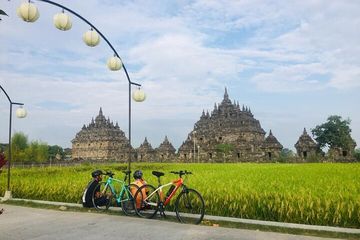
Menoreh Village Cycling
The countryside leader — 675 reviews at 4.98. Rice fields, rivers, and the Menoreh Hills with stops to see how tofu, tempeh, and village crops are actually made. An early morning ride before the midday heat, flat-to-gentle terrain, bicycle and helmet included.
See dates & prices →Option C: The slow temple morning — no rush, no marathon
For: the traveller who loved the temples but wants more time with them. Start: whenever you wake. Return: whenever you are done.
This is not a tour. This is you, a hired driver for the morning, and whichever temple you felt you rushed. Maybe it is Borobudur again, the courtyard this time, sitting on the lawn with a coffee watching the light change on the stupas without a schedule pushing you along. Maybe it is Mendut, the small ninth-century temple three kilometres east of Borobudur with the magnificent three-metre seated Buddha flanked by two bodhisattvas, a place most tours drive straight past. Maybe it is the Kraton, the Sultan's palace in the heart of the old city, on the ceremonial axis that runs from Merapi in the north to the southern sea, a quiet morning of royal Javanese architecture and the cool palace courtyards.
If you want a temple morning with a guide and transport handled, the Borobudur Climb to the Top and Prambanan tour (4.93★, 664 reviews) adds Mendut and gives you time at both temples without the volcano rush. Or go independent — hire a car and driver from your hotel, pick one site, and stay until you are ready to leave. The temples reward slowness more than almost anything else on this itinerary.
The honest catch: there is no catch. This is the recovery day disguised as a cultural morning. You have already seen the headline sights. Now you get to feel them without the clock.
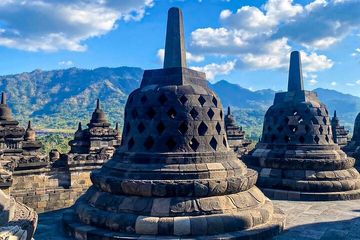
Borobudur Climb to the Top & Prambanan — the two-temple day, unhurried
Adds Mendut, the oldest Buddhist temple in the area, alongside Borobudur and Prambanan. Trims the volcano to give the temples the time they deserve. For the traveller who wants depth at the stone, not mileage.
See dates & prices →Decision tree: which Day 3 is yours?
I have watched enough travellers choose badly on day three to know that the question is not "which is best" but "what do you actually have left in you." Here is the short version:
Pick Option A — the caves — if you woke up this morning still hungry for a physical challenge. If the idea of descending sixty metres on a rope excites rather than frightens you. If the weather forecast is clear and you can book Jomblang days ahead for the morning slot. Do not pick A if you are tired of early starts, uneasy with heights, or travelling in the wet season when the light beam is a gamble.
Pick Option B — the cycling — if you want the Java most visitors never see. If you prefer quiet villages to big monuments. If the words "rice field at sunrise on a bicycle" make you smile. Do not pick B if you are exhausted from two early starts, if your legs are already sore, or if you cannot handle tropical morning heat on a saddle.
Pick Option C — the slow temple morning — if you are tired, honestly tired, and you want one more gentle morning with the stone without a schedule. If you felt rushed at Borobudur or Prambanan and want to go back and sit. If you simply want a coffee and a view and no alarm clock. This is the recovery choice, and there is zero shame in it. The temples have been here for twelve hundred years; they will still be here when you wake up.
Rama's rules for making this itinerary work
- Book the Borobudur climb ticket before you land. It is the single thing that catches the most travellers. The daily quota is small and fills early. If climbing to the top is the point, book it days ahead — the guaranteed ClimbUP tour removes the gamble.
- Carry cash in small notes every single day. The Merapi jeep crews, cave villages, cycling stops, and warungs do not take cards. The nearest ATM to a volcano track or a cave village is an hour away. Break your large notes in the city.
- Hire a car and driver for any temple or volcano day, do not rely on Grab or Gojek. The apps work inside the city but get patchy and expensive out at the sites. A hired driver for the day is cheaper than stacking app rides and far less stressful.
- Sunrise tours quote the pickup time, not the start time. A 03:30 pickup means an hour-plus drive in the dark. Eat something before you leave. Nothing is open out there.
- Wear shoes you can ruin on Merapi day. The lava jeep route is black volcanic dust. You come back coated. Leave the white sneakers at the hotel.
- Check Jomblang availability and weather before committing to Day 3 Option A. The daily visitor cap is tiny, the light beam depends on clear skies, and the slot you want is the late-morning one. Book it as early as you can.
The mistakes I watch travellers make on a three-day itinerary
The first is over-stuffing. Every season someone tells me they want to pack Borobudur, Merapi, Prambanan, the caves, and a cycling tour into three days. That is five major sites across three regencies with real driving time between them. You would spend more hours in a car than in a temple. Pick three days and let each day breathe. The itinerary above gives you the two UNESCO temples, the volcano, the food, and one more mood — that is more than enough.
The second is underestimating the early starts. A pre-dawn pickup on Day 1 followed by another on Day 2 sounds fine when you are booking from your sofa at home. On the ground, after a long flight into a hot country, it is harder. Build in the nap after Merapi. Do not book a late dinner you will be too tired to enjoy. Let Day 3 be gentler — that is why the slow temple morning exists as an option.
The third is not matching Day 3 to your actual energy. I have watched travellers book Jomblang after two sixteen-hour days and arrive at the sinkhole already spent, the rope descent feels like a punishment instead of an adventure. Be honest with yourself on the morning of Day 2 about what you have left. The caves will still be there next time. A slow morning at Mendut with a coffee and a three-metre Buddha is its own kind of perfect.
Let me leave you with the thing I tell every traveller who asks me to plan three days. Yogyakarta is not a checklist. The temples, the volcano, the food — they all reward the same thing: showing up present, not rushed. The itinerary above gives you the shape. Your own pace fills it in. Go slowly. The stone has waited twelve centuries. It can wait for you to finish your coffee.
Rama earns a commission when readers book through the Viator links on this site, at no extra cost to the traveller. This does not affect which tours are recommended, every tour passes three checks: guide quality, safety record, and value. Rama does not run a tour company. He does not sell packages.