Merapi Safety: What You Need to Know
Merapi is an active volcano, not a theme park. This page explains the alert levels, the exclusion zones, the 2010 eruption, and how to check current conditions before you book. From a guide who lives on her slope.
This is not a sales page. I am not going to tell you which Merapi tour to book — you can find that on my main Merapi page. This page exists because travellers ask me, almost every week, some version of the same question: "Is it safe?" The honest answer is that Merapi is one of the most active volcanoes in Indonesia, monitored every hour of every day by BPPTKG, the national volcano observatory, and visited safely by thousands of travellers each year through operators who respect the zones that monitoring draws. The less-honest answer — "of course it's safe, book now" — is what you get from a listing that wants your money. Below is what I would tell a friend who asked the question over coffee at my own table in Sleman.
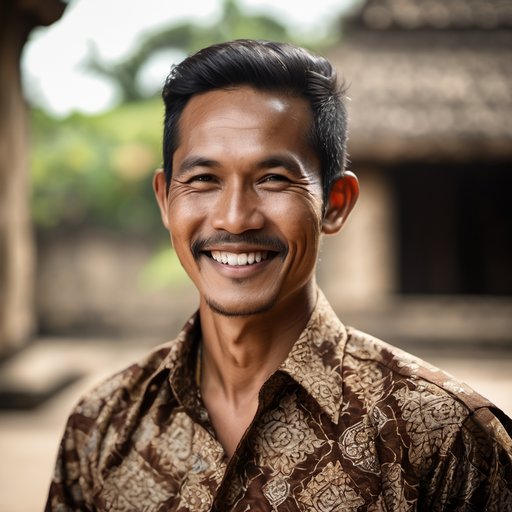
My name is Rama Kusuma. I live on Merapi's southern slope, in the same village my family evacuated when the mountain erupted in 2010. The volcano you are paying to visit is the same one I watch from my own front step every morning. This page comes from that place — not from a tour desk.
The BPPTKG alert levels explained
BPPTKG (Balai Penyelidikan dan Pengembangan Teknologi Kebencanaan Geologi) is the government agency that monitors Merapi around the clock. They maintain a four-level alert system that dictates where anyone — local, guide, or tourist — is allowed to be. Understanding these levels is the single most important thing you can do before booking a Merapi tour.
Level I — Normal (Aman). The volcano is quiet. Seismic activity, gas emissions, and dome growth are all within baseline readings. At this level, the standard tour routes — the Kaliurang and Kaliadem jeep tracks, the hiking routes — operate as normal. The exclusion zone is typically a radius of three to five kilometres from the summit. This is the condition under which most Merapi tours run.
Level II — Alert (Waspada). Something has changed. There may be increased seismic tremors, slight dome growth, or elevated gas readings. The exclusion zone widens, commonly to around five to seven kilometres from the summit. Tours may still operate but with adjusted routes — the jeeps stay further out, the hiking trailhead moves lower. A reputable operator will tell you about the alert level change and adjust the route. A less reputable one will run the normal route and hope nothing happens. The difference matters.
Level III — Standby (Siaga). The volcano is showing clear signs of unrest — sustained tremor, rapid dome growth, significant gas output. The exclusion zone extends further, often seven to ten kilometres or more, and many villages on the upper slopes begin preparing to evacuate. At Siaga, most responsible tour operators suspend Merapi visits entirely. The risk is real and the monitoring agency is signalling that an eruption could occur. If you are in Yogyakarta during a Siaga period, do not book a Merapi tour. Visit the temples instead. The mountain will still be there when she settles.
Level IV — Danger (Awas). An eruption is imminent or in progress. The exclusion zone is maximum — ten kilometres or more — and mandatory evacuations are in effect for communities within it. All tourism to Merapi is shut down. If you are in Yogyakarta during Awas, follow the instructions of local authorities and your hotel. Do not go anywhere near the mountain. This level is rare — the last Awas was during the 2010 eruption — but it exists for a reason.
The current alert level is public information. BPPTKG posts it on their website and social media channels. Ask your hotel, ask your tour operator, and check it yourself before you book. A responsible operator will tell you the current level without being asked. If an operator cannot or will not tell you the alert level, book with someone else.
Exclusion zones — the line that keeps you safe
The exclusion zone is not a suggestion. It is a legally enforced radius around the summit, set by BPPTKG based on real-time monitoring data, and it shifts with the alert level. At Normal (Level I) the zone is three to five kilometres. At Waspada (Level II) it widens to five to seven. At Siaga (Level III) it can reach ten or more. At Awas (Level IV) the zone is maximum and evacuations are compulsory.
The jeep lava tour does not approach the summit. The standard jeep route through Kaliurang and Kaliadem runs well outside the exclusion zone at Normal and Waspada levels, on the lower southern flank of the mountain roughly seven to ten kilometres from the summit. You are visiting the pyroclastic track left by the 2010 eruption, the bunker, and the museum — you are not driving toward the crater. This is why the jeep tour operates safely even when the alert level is Waspada: the route stays in the permitted zone.
Hiking tours are different. A Merapi summit hike takes you far closer to the crater, and these tours are far more sensitive to the alert level. At Waspada (Level II), summit hikes are typically suspended. The trailhead is moved lower, or the tour becomes a lower-slope trek rather than a summit push. A responsible hiking operator monitors BPPTKG daily and will cancel or adjust the route without hesitation. A less responsible one will take your money and hope the mountain behaves. When you book a Merapi hike, ask specifically: "What happens to this hike if the alert level rises to Waspada?" If the operator gives you a clear cancellation and refund policy, book. If they wave the question away, walk away.
The 2010 eruption — why this page exists
You cannot understand Merapi safety without understanding 2010. It is the reason the alert levels are taken so seriously, the reason the exclusion zones are enforced, and the reason every reputable operator on this mountain operates inside a framework that did not exist before.
In late October and early November 2010, Merapi produced its largest eruption in over a century. Pyroclastic flows — avalanches of superheated gas, ash, and rock moving at hundreds of kilometres per hour — swept down the southern and southeastern slopes. The flows reached far beyond the exclusion zone of the time, into villages that had been considered safe. Over three hundred and fifty people were killed. Tens of thousands were evacuated. Entire villages were buried in grey ash and stone.
Among the dead was Mbah Maridjan, the juru kunci — the traditional gatekeeper of Merapi, appointed by the Sultan of Yogyakarta to perform the rituals that Javanese belief holds keep the mountain in balance. Maridjan refused to evacuate, staying in his house in Kinahrejo village on the upper slope, roughly six kilometres from the summit. When the pyroclastic flow came through, it took him with it. His body was found in a position of prayer.
I tell you this not to frighten you but because it is the story that every guide on this mountain carries. My own family evacuated that year. The jeep route you ride today crosses exactly the ground the 2010 flows scoured — the black dust, the buried houses, the museum of melted belongings. That is not theme-park decoration. It is memory. And the BPPTKG monitoring system, the four-level alert, the enforced exclusion zones, the daily briefings that reputable operators read before they start an engine — all of it was hardened and rebuilt after 2010 precisely so that what happened that year does not happen again to travellers who simply wanted to see the mountain.
When you visit Merapi, you are visiting a place where people died. The best thing you can do with that knowledge is choose an operator who respects it. The worst thing you can do is treat the bunker like a selfie backdrop and the alert levels like paperwork.
What reputable operators do — and what to watch for
A good Merapi operator does the following things without being asked. Use this as your checklist.
They know the current alert level. Ask your driver or guide what level BPPTKG has posted today. If they cannot answer, they are not paying attention. A guide who checks the observatory report before starting the engine is a guide who takes the mountain seriously.
They stay inside the permitted zone. At Normal (Level I) the exclusion zone is narrow, and the jeep route and standard hiking trails are well within the safe radius. A reputable operator does not offer to take you closer for a better view — that is not a bonus, it is a violation. If a guide says "I know a spot past the checkpoint," get out of the jeep.
Their jeeps and equipment are maintained. The pyroclastic tracks are punishing on vehicles. Jeeps break down — it happens. In 2023 I was on a jeep that stalled deep on a dust track. The driver, Aan, knew his vehicle, had tools and water, and had us moving again in twenty minutes. A poorly maintained jeep with no tools and a driver who panics is a different situation. Look for operators with recent reviews that mention the condition of the vehicle.
They tell you what to bring. A good operator tells you to wear closed shoes, to bring a layer for the pre-dawn cold, and to carry cash in small notes because the museum and the warungs do not take cards. An operator who tells you "just bring yourself" has not thought about your comfort or safety.
They have a cancellation policy that respects the alert level. If BPPTKG raises the alert to Siaga (Level III) and the tour cannot run, a reputable operator refunds or reschedules without argument. Before you book, read the cancellation terms. If they are vague or absent, book with someone else.
Two Merapi tours that meet the safety standard
The tours below pass the safety checks I just described. They operate inside the BPPTKG zone, their guides know the mountain, and their vehicles are maintained for the pyroclastic tracks. This is not an exhaustive list — it is a starting point for travellers who want a tour they can trust.
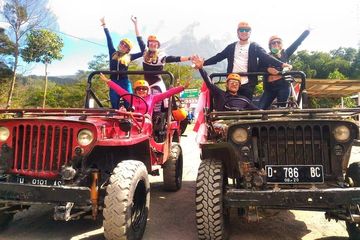
Private Merapi Volcano 4WD Jeep Tour
A private, volcano-only experience. The guide drives the Kaliurang–Kaliadem route — the bunker, the Museum Sisa Hartaku, and Batu Alien — at your pace, with no temple schedule to rush you off the mountain. Private format means you can ask every question about the 2010 eruption and the current alert level without feeling hurried.
See dates & prices →
Borobudur, Merapi Jeep & Prambanan — One Day Tour
A clean 5.0 rating across every traveller who has reviewed it. This tour threads the jeep route through the 2010 pyroclastic track between the two UNESCO temples. It frames the route through the eighth-century Buddhist temple trio — Borobudur, Pawon, Mendut — alongside the volcano, reflecting a guide team that understands the cultural and geological context as one story.
See dates & prices →
Mount Merapi Sunrise, Jomblang Cave and Pindul Cave Tour
For adventure travellers who want a Merapi sunrise paired with the Jomblang descent and Pindul tubing. At 4.97 stars, this operator handles three distinct experiences in one day — mountain sunrise, vertical cave, underground river — with the logistics and safety protocols each requires.
See dates & prices →How to check Merapi conditions before you book
- Visit the BPPTKG website. The agency posts the current alert level, daily activity reports, and exclusion zone maps in Indonesian. Google Translate handles it well enough. Search for "BPPTKG Merapi status" — the official site ends in .esdm.go.id.
- Ask your hotel. Any hotel in Yogyakarta knows the current Merapi status. It is local news, updated daily, and hotel staff will tell you honestly whether tours are running.
- Ask your tour operator directly. Before you pay, ask: "What is the current BPPTKG alert level for Merapi, and does my tour route stay inside the permitted zone?" A good operator answers immediately. A bad one hesitates or changes the subject.
- Check recent reviews. Look at reviews from the last two weeks. If Merapi tours have been running normally for other travellers, the alert level is likely Normal or low Waspada — and the operator's recent guests will have written about it.
- If the alert level is Siaga (Level III) or Awas (Level IV), do not book. At Siaga, most reputable operators suspend tours. At Awas, all tourism is shut down. Visit the temples. The mountain is not going anywhere, and you want to be alive when she settles.
The mistakes I watch travellers make with Merapi safety
The first is booking a tour without checking the alert level. Merapi is not a dormant volcano with a visitor centre at the top. She is active, constantly monitored, and the rules around her change. Booking a Merapi tour for a date three months from now without understanding that the alert level can shift is a gamble. Most of the time it pays off — Merapi spends more time at Normal than at any other level. But the website that took your money does not care whether the mountain erupts on your holiday. You should.
The second is assuming a cheap tour operator follows the same safety protocols as a reputable one. Merapi jeep tours range from operators who check BPPTKG daily and maintain their vehicles to operators who run the same route regardless of the alert level because they need the fare. The price difference is small. The safety difference is not. Read the reviews, ask the questions, and choose an operator who respects the mountain.
The third is treating the bunker and the museum as photo ops. The Kaliadem bunker is not a scenic viewpoint — it is a concrete shelter where two people died seeking refuge. The Museum Sisa Hartaku is not a polished exhibit — it is a survivor's house left exactly as the pyroclastic flow froze it, with melted clocks still showing the hour the heat came through. I have watched travellers pose grinning in front of a wall of fused crockery, and I have watched other travellers walk through that museum in silence and then ask the keeper his own story. Be the second kind. The mountain notices, not literally, the Javanese in me knows it is stone and gas and physics — but the people who work the mountain notice, and a traveller who shows respect gets a different experience than one who treats tragedy as scenery.
Let me leave you with the thing I carry from 2010. My father stood in this same village and watched the ash cloud rise over the houses of families we knew. He did not wait for the official order — he packed the car, gathered the children, and drove south. The mountain took the gatekeeper who stayed. My family lived because my father read the mountain, not the paperwork. That is the instinct every good Merapi guide carries: read the mountain, respect the alert, and get your guests home. The tours above are run by people who carry that same instinct. Book with them, check the alert before you go, and let Merapi be what she is — a neighbour we live beside, not a backdrop we pose in front of. She will give you a morning you do not forget, for the right reasons.
Rama earns a commission when readers book through the Viator links on this site, at no extra cost to the traveller. This does not affect which tours are recommended, every tour passes three checks: guide quality, safety record, and value. Rama does not run a tour company. He does not sell packages.