Getting Around Yogyakarta
From the airport to the temples, from the volcano to the caves — the honest transport map I give every traveller who asks. Distances are real, prices shift, and the best way is sometimes a taxi and sometimes a tour.
Yogyakarta is not a difficult city to navigate, but the things you came here to see — Borobudur, Prambanan, Merapi, the Gunungkidul caves — are spread across three regencies, and the distance between them is real. A morning temple, an afternoon volcano, and an evening cave are not neighbours. The best way to move depends on where you are going and what hour you are leaving. Below is exactly how I would tell a friend to handle each leg. If you want someone else to handle all of it, the full-day Borobudur, Merapi and Prambanan tour (4.91★, 1,082 reviews) includes every kilometre of transport in a single sweep — temple, volcano, temple, all driven — and for a first-timer it removes the single largest headache of a Yogyakarta visit.
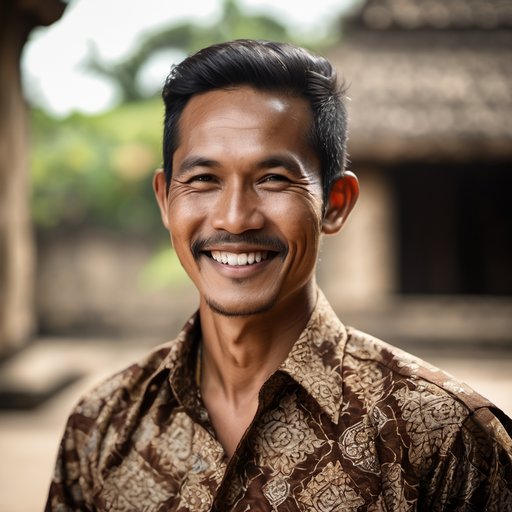
My name is Rama Kusuma. I have been guiding across Central Java for twenty years, and I have watched too many travellers hail a Grab to Borobudur at five in the morning and wait forty minutes for a car that never comes. The transport advice below is the stuff that lives in a guide's head — where the apps work, where they fail, what a driver should cost, and when a tour that includes transport is actually the cheaper option.
This site is not a transport company. I do not run cars or sell rides. I earn a commission when you book through the Viator links on this page, at no extra cost to you — that is how the site stays free.
YIA airport to the city
Almost everyone now lands at Yogyakarta International Airport (YIA) in Kulon Progo, roughly forty kilometres west of the city centre. Budget one to one and a half hours by road to your hotel, longer in heavy traffic. The airport replaced the old Adisutjipto field for most commercial flights in 2019–2020, and it is farther from town than visitors expect. Do not be alarmed when the taxi meter keeps ticking — the distance is normal.
You have three options at the arrivals hall:
Fixed-price airport taxi, bought at the counter inside. This is the simplest. You pay at the desk, they hand you a slip, and a driver with a proper car takes you to your hotel. The price is fixed and posted, so there is no haggling and no meter anxiety. It costs more than a ride-hailing app but less than a pre-arranged private pickup, and after a long flight the simplicity is worth the premium.
Grab or Gojek, summoned on your phone. Both apps work at YIA and are meaningfully cheaper than the fixed-price taxi — often half the price for the same forty-kilometre run. The catch is that you need an Indonesian SIM or wifi to summon the car, and the pickup point at YIA is a specific Grab/Gojek zone a short walk from arrivals. If your flight lands late at night or your phone data is not yet working, the fixed-price counter is the more reliable choice. Do not try to hail a Grab from the regular taxi lane — the driver will direct you to the app zone.
Pre-arranged hotel pickup. Most hotels in Yogyakarta will send a driver who waits at arrivals with your name on a card. It is the calmest way to start — no counter, no app, no fumbling for rupiah. The cost is usually between the fixed-price taxi and a private car, and many mid-range hotels include it in the room rate. Tell your hotel your flight number the day before.
There is an airport rail link to the edge of the city, but with luggage after a long flight I rarely recommend it for first-time visitors. The station is not central, and you will need another ride from the station to your hotel anyway. Take a car.
Getting to Borobudur
Borobudur sits in Magelang Regency, about forty kilometres northwest of Yogyakarta city. The drive takes one to one and a half hours depending on traffic and the hour.
You have two realistic options, and the right one depends entirely on when you are going.
Option 1: A tour that includes transport. This is what I recommend for almost every first-timer, and especially for sunrise. A pre-dawn pickup at 03:30 is not a Grab ride. The apps are thin at that hour, the drivers who do accept the fare often do not know the temple roads, and you risk waiting in the dark while your sunrise window closes. A tour includes a driver who knows exactly where Setumbu Hill is, where the Borobudur entrance is, and how the timed climb slots work. The guaranteed ClimbUP tour (4.96★, 157 reviews) includes round-trip transport from Yogyakarta and locks your summit slot in writing — the transport and the ticket handled together. The Borobudur Climb to the Top and Prambanan tour (4.93★, 664 reviews) also includes transport and adds Mendut temple on the way.
Option 2: A hired car and driver for the day. If you are not doing sunrise, or you are returning to Borobudur for a second visit, hire a driver. Your hotel can arrange one, or you can negotiate directly with a driver in the city. Agree the full-day rate, the route, the waiting time, and the total price in writing on your phone before you leave. A full day with driver is far more affordable than most visitors expect — generally less than the cost of stacking four Grab rides to the same places. Do not attempt Borobudur by public bus unless you speak Indonesian and have a full day to spare, the connections are slow and indirect and not designed for a tourist timetable.
Getting to Prambanan
Prambanan is closer — about seventeen kilometres east of the city, roughly thirty to forty-five minutes by car. This is the temple where you have genuine transport choices.
Grab or Gojek car. Unlike Borobudur at dawn, Prambanan at a normal hour is a perfectly reasonable Grab ride from central Yogyakarta. The app will quote you a fixed price, the driver will know the temple entrance, and the ride back is usually summonable from the parking area, though you may wait ten to fifteen minutes for a car to reach you. If you visit in the morning and leave by early afternoon, Grab works fine. Late afternoon in the wet season — when storms are common and drivers thin out — it gets harder. I have waited forty minutes for a Grab at Prambanan after a storm cleared the parking lot.
TransJogja bus. The city's bus rapid transit system runs a route to Prambanan (Route 1A) from the city centre. It is cheap, air-conditioned, and reliable during the day. The stop is near the temple entrance. You need an electronic card (bought at major stops) and Indonesian rupiah to top it up. This is the lowest-cost option and it works — but the bus stops running in the evening, and you are on a public timetable. Fine for a daytime temple visit. Not fine for the Ramayana Ballet, which finishes after dark.
Tour with transport included. The private all-inclusive Borobudur and Prambanan tour (4.96★, 165 reviews) is self-paced and private, with a driver who waits while you explore. If you are doing both temples in one day, a tour like this is often cheaper and far less stressful than two separate Grab rides across two regencies. The driver stays with you, the car is yours, and you are not summoning a new ride at each temple gate.
Getting to Merapi
Merapi rises north of the city, and the jeep tour zone — Kaliurang and Kaliadem — sits about forty-five minutes to an hour from central Yogyakarta, up winding mountain roads.
There are no independent jeeps for rent at the base. The lava tour is always either booked as a tour package that includes transport from Yogyakarta, or arranged through a local operator in Kaliurang who provides both the jeep and driver. You cannot simply drive to the mountain, rent a jeep, and drive yourself across the pyroclastic tracks. The routes are not marked, the terrain is rough and shifting, and a guide who knows the safe zone is the whole point.
Most visitors book either a Merapi-only tour or a combined temple-and-volcano tour that includes transport. The private Merapi 4WD jeep tour (4.84★, 56 reviews) is the volcano-only option, private transport from the city, the jeep, the bunker, the museum, the whole morning handled. The Borobudur, Merapi Jeep and Prambanan tour (5.0★, 33 reviews) threads the jeep between the two temples in a single transport-included day.
Do not rely on Grab for the return trip from Kaliurang. The mountain roads are quiet, the app signal is weak up there, and a driver accepting a fare from the city may take an hour to reach you. A tour with transport is the way to do Merapi.
Getting to the caves (Jomblang and Pindul)
The Gunungkidul caves lie southeast of Yogyakarta, about one and a half to two hours from the city. The roads are decent but winding through karst hills, and the last few kilometres to Jomblang are narrow village lanes.
Tours include pickup from Yogyakarta, and this is the right way. Jomblang in particular is not a place you drive yourself to on a scooter and figure out at the gate. The visitor cap is tiny, the rope descent requires the local crew, and the timing to catch the light beam is narrow. A tour handles the transport, the Jomblang slot, the equipment, and the drive to Pindul afterward. The Jomblang Cave and Pindul Cave tour (4.96★, 28 reviews) includes hotel pickup from Yogyakarta, the harness and rope crew at Jomblang, and the tube and life jacket at Pindul. The alternative Jomblang and Pindul shared tour (4.87★, 86 reviews) has more completed trips under its belt — the operator handles the cave slot timing routinely.
If you are determined to go independently, you would hire a car and driver from the city for the full day, arrange your Jomblang slot directly with the cave management days ahead, and hope the weather cooperates. I have done it both ways. The tour is simpler, and the transport cost bundled into the tour price is almost always cheaper than hiring a private driver for the full Gunungkidul round trip.
Scooter rental — the reality
A scooter in Yogyakarta costs around IDR 70,000 per day from most rental shops in the Prawirotaman and Sosrowijayan tourist areas. It is cheap, it is fun, and it gives you complete freedom inside the city.
Here is the honest part. You need an international driving licence with a motorcycle endorsement. Indonesian police do check, especially on the ring road and near the temples, and the fine for riding without one is not trivial. Your rental shop will not ask for it — they rent to anyone — but the police will. Traffic in Yogyakarta is real. It is not Jakarta chaos, but the main roads are dense with cars, trucks, becaks, and other scooters, and the unwritten rules of Indonesian traffic flow take days to learn. If you have never ridden a scooter before, Yogyakarta is not the place to learn — a day-one accident on a rented bike with no insurance is a bad way to start a holiday.
For getting to the temples, a scooter is possible but I do not recommend it. Borobudur is forty kilometres of highway each way, Prambanan is a faster ride but still a main-road haul, and Merapi is winding mountain roads that get cold and dark before sunrise. A car with a driver costs more but removes the risk of an accident on unfamiliar roads in a foreign country. If you ride a scooter, ride it inside the city, to the Kraton, to the markets, to the food stalls. Leave the temple runs to a car.
Grab and Gojek — when they work and when they do not
Both apps work well inside the city. For moving between your hotel, the Kraton, Malioboro, the Tugu station area, and the southern neighbourhoods, Grab and Gojek are cheap, fast, and metered by the app so there is nothing to haggle. Install one before you arrive and link a payment card.
Out at the temples, the volcano, and the caves, the apps get patchy. Drivers are scarce far from the city, and the ones who do accept a fare from Borobudur or Kaliurang may be coming from twenty kilometres away. You will wait. For any trip beyond the ring road, a hired car-and-driver for the day is cheaper than stacking app rides and removes the wait. The rule I give every traveller: Grab inside the city, hired driver outside the city.
One more thing about the app motorbike taxis — ojek — they are the fastest way to cut through Yogyakarta traffic, and helmet use is standard. But they are not for temple runs. Forty kilometres on the back of a motorbike on a highway is not the same as a ten-minute zip across town.
Train to Solo — a proper day trip
Solo (Surakarta), the sister royal city, lies about sixty-five kilometres east of Yogyakarta. The train from Tugu station takes roughly one hour and runs frequently through the day. It is an easy, comfortable day trip — Javanese trains are air-conditioned, clean, and punctual enough to plan around.
In Solo you visit the Mangkunegaran Palace, the batik markets of Laweyan and Kauman, and the old royal neighbourhoods that mirror Yogyakarta's Kraton culture but with their own distinct character. Buy your train ticket the day before at the station or on the KAI Access app. The executive class costs a few dollars more than economy and is worth it for the legroom and the quiet. You do not need a tour for Solo — the train, a Grab in Solo, and a map are enough. Return by late afternoon on the same line and you are back in Yogyakarta for dinner.
Rama's transport rules
- Grab inside the city, hired driver outside the city. The apps work beautifully in town and fail reliably out at the temples. Do not bet a sunrise on a Grab that might not come.
- For any temple or cave day trip, hire a car and driver or book a tour that includes transport. The cost of a driver for the day is often cheaper than three separate app rides, and far less stressful. Agree the route, wait time, and total price up front in writing on your phone.
- Merapi and the caves are always tour-included. There are no independent jeeps to rent at Merapi, and Jomblang's tight slot and remote location make a self-drive a logistical headache. Book a tour with transport.
- If you ride a scooter, carry your international licence and wear the helmet. Police checks are real, and riding without a proper licence is not worth the risk. Leave the temple runs to a car — ride the scooter inside the city.
- Sunrise tours quote pickup time, not start time. A 03:30 pickup means a 03:30 car at your hotel, not a 03:30 arrival at the temple. Budget the drive time in your head.
- Carry cash for transport incidentals — parking, tolls, a tip for a good driver. The apps take cards but the parking men at the temple gates do not.
The mistakes I watch travellers make with transport
The first is assuming Grab works everywhere in Java the way it works in Bangkok or Kuala Lumpur. It does not. The coverage thins sharply once you leave the city, and pre-dawn is the worst hour to test it. Every season someone messages me from their hotel lobby at four in the morning because their Grab to Borobudur cancelled and there is no second car available. The apps are a city tool, not a rural one.
The second is renting a scooter for a temple run without an international licence. The rental shop will hand you the keys with a smile and no questions. The police at the Prambanan checkpoint will not smile, and the fine is a conversation you do not want in a foreign language.
The third is underestimating the distances. The three headline sights — Borobudur northwest, Prambanan east, Merapi north — form a wide triangle around the city with real kilometres between them. You cannot walk from one to the next, and a scooter will take forty minutes between each. Hire a driver and let them handle the roads while you watch the rice fields roll past.
Let me leave you with the rule I live by on these roads. The right transport is the one that lets you arrive present, not stressed. If that means paying a little more for a driver who waits at arrivals with your name on a card, pay it. If it means booking a tour that handles every kilometre, book it. You came to see the temples and the volcano, not to spend your mornings staring at a phone screen waiting for an app to find a car. The stone will still be there when you arrive. Make sure you are too.
Rama earns a commission when readers book through the Viator links on this site, at no extra cost to the traveller. This does not affect which tours are recommended, every tour passes three checks: guide quality, safety record, and value. Rama does not run a tour company. He does not sell packages.